
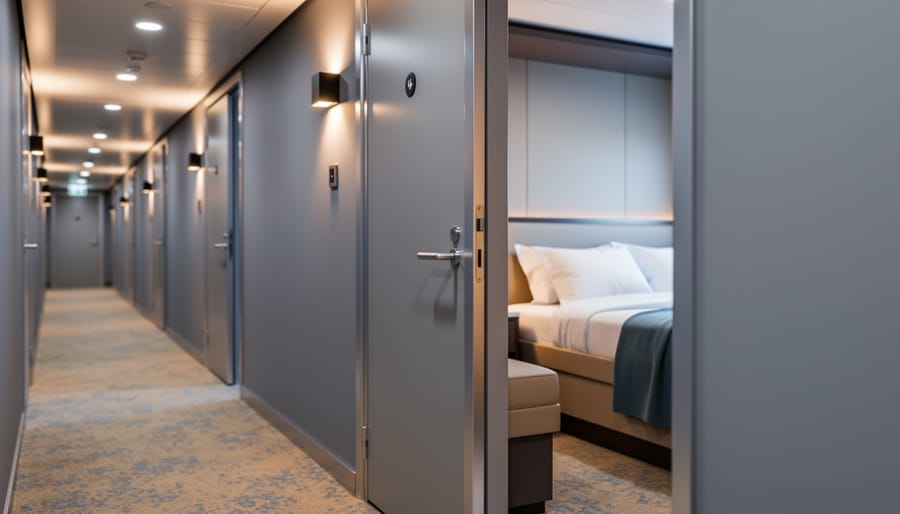
A cruise interior stateroom is a cabin located within the ship’s interior corridors, without windows or natural light, designed to maximize space efficiency while providing all essential amenities at the most accessible price point. These accommodations account for roughly 30 to 40 percent of cabin inventory on modern cruise vessels, serving travelers who prioritize budget and itinerary over in-room views.
For design-conscious travelers accustomed to light-filled spaces and curated interiors, the prospect of spending a week in a windowless cabin might seem counterintuitive. Yet interior staterooms represent one of the smartest strategic choices in cruise planning, particularly for guests who understand that the cabin serves primarily as a sleeping sanctuary between experiences. Modern cruise lines have transformed these spaces from mere functional compartments into thoughtfully designed retreats, employing sophisticated lighting strategies, clever spatial planning, and premium finishes that rival their ocean-view counterparts in comfort and style.
The value proposition extends well beyond simple cost savings. By selecting an interior stateroom, travelers unlock the same access to onboard dining venues, entertainment programming, spa facilities, and port destinations as passengers in suites three times the price. The financial difference often covers shore excursions, specialty dining experiences, or cabin upgrades on future voyages. For active cruisers who treat their stateroom as a comfortable base rather than a destination, this trade becomes remarkably advantageous.
This guide explores how interior staterooms function within cruise ship architecture, the distinctions between various interior cabin categories, and the decision framework for determining whether these accommodations align with your travel style. You’ll discover how leading cruise lines approach interior design challenges, what amenities define a well-appointed interior cabin, and which specific scenarios make these staterooms the superior choice over higher-priced alternatives.
Understanding Cruise Interior Staterooms
A cruise interior stateroom represents a windowless accommodation located deep within the ship’s interior corridors, typically positioned on middle decks away from the vessel’s outer hull. These sophisticated spaces exemplify how thoughtful spatial planning and meticulous design transform what might seem like a limitation into an environment of refined comfort and understated luxury.
Unlike oceanview or balcony cabins that command premium pricing for their vistas, interior staterooms occupy the ship’s core zones, often nested between exterior corridors and public spaces. This central positioning offers practical advantages: minimal ship motion during rough seas, convenient access to elevators and amenities, and insulation from engine vibration that can affect certain exterior cabin locations. The structural placement also means these rooms benefit from the ship’s most stable areas, creating a sanctuary that feels grounded rather than confined.
What distinguishes luxury interior staterooms from basic accommodations is the caliber of design execution. High-end cruise lines approach these spaces with the same dedication they bring to suites, employing custom millwork, premium materials, and sophisticated spatial strategies that make every square inch count. The absence of windows becomes an opportunity rather than a compromise, allowing designers to control every aspect of the environment through carefully orchestrated lighting, rich textiles, and architectural details that draw the eye upward and outward.
- Interior Stateroom
- A cabin located within the ship’s interior corridors with no windows or natural light, designed to maximize space efficiency while maintaining comfort and style.
- Midship Location
- The central area of the vessel between bow and stern, offering the most stable positioning with reduced motion during sailing.
- Deck Placement
- The vertical positioning of cabins throughout the ship’s levels, with interior staterooms typically found on middle decks for optimal stability and access.
- Virtual Balcony
- An innovation in select interior staterooms featuring a floor-to-ceiling high-definition screen displaying real-time ocean views and destinations.
The positioning of these staterooms as accessible elegance speaks to a broader philosophy in luxury hospitality: true sophistication lies not in square footage or views, but in the quality of craft and attention to human comfort. For travelers who appreciate design excellence and spend their days exploring ship amenities and destinations, these spaces offer a compelling proposition that prioritizes substance over superficial markers of luxury.
How Interior Staterooms Work
Ventilation and Climate Control
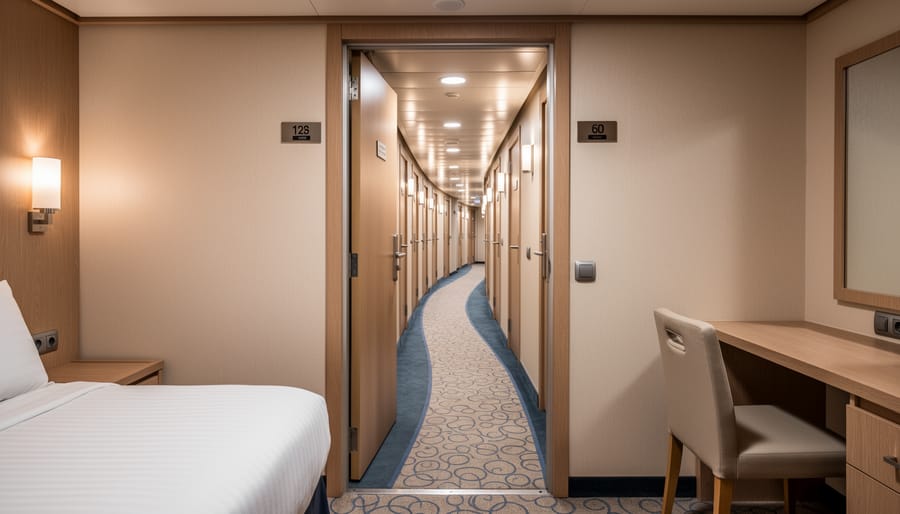
Behind the elegant finishes and carefully curated furnishings of an interior stateroom operates a sophisticated climate management system designed to deliver fresh, comfortable air continuously. Modern cruise ships employ advanced HVAC networks that replace the air in these windowless spaces multiple times per hour, maintaining optimal oxygen levels and preventing the stale conditions that plagued older vessels. Research on ventilation performance on cruise ships confirms that contemporary systems can achieve air exchange rates comparable to or exceeding those in windowed cabins.
Temperature precision matters equally. Interior staterooms feature individual thermostats that allow granular control, typically ranging from eighteen to twenty-five degrees Celsius. The absence of sun exposure through windows actually creates an advantage: these spaces maintain more consistent temperatures without the heat gain that balcony cabins experience during sunny afternoons. The HVAC supply vents are strategically positioned to create gentle air circulation without drafts, often concealed within ceiling coves or millwork details that preserve the room’s refined aesthetic. Humidity levels stay regulated automatically, preventing both the dryness that disrupts sleep and the dampness that affects fabrics and comfort.
Lighting Design Strategies
The absence of natural light transforms lighting design from a supporting element into the primary tool for creating atmosphere and functionality in interior staterooms. The most successful cabins employ a layered approach that mirrors the sophisticated techniques used in high-end residential design, where multiple light sources at varying heights and intensities work together to create depth and visual interest.
Overhead ambient lighting provides the foundation, typically utilizing recessed fixtures with warm color temperatures that prevent the harsh, institutional feel of cool white illumination. Task lighting appears at strategic points, adjustable reading lamps flanking the bed, focused vanity illumination, and discreet under-cabinet strips that highlight millwork while providing practical function. The crucial third layer consists of accent lighting that adds drama and dimension: backlit mirrors that suggest windows, cove lighting that lifts the ceiling plane, and decorative fixtures that serve as jewelry within the space.
Modern staterooms increasingly feature dimming capabilities across these layers, allowing occupants to orchestrate their own lighting scenes throughout the day. This control creates the psychological shift between morning energy and evening relaxation that natural light cycles would normally provide, establishing circadian rhythms that enhance comfort during extended voyages.
Space Optimization Techniques
Cruise interior staterooms exemplify spatial efficiency through ingenious design principles borrowed from high-end residential architecture. Multi-functional furniture anchors these compact quarters, beds with integrated storage drawers, nightstands that double as desks, and cleverly concealed wardrobes with pull-out sections. Designers employ vertical space brilliantly, installing overhead compartments and tall, slim storage towers that draw the eye upward, creating an impression of height.
Mirrors positioned strategically opposite entryways or along wardrobe doors amplify perceived dimensions while reflecting ambient light throughout the room. The color palette typically features light neutrals on walls and ceilings, expanding visual boundaries. Built-in millwork eliminates wasted corners, transforming every centimeter into usable storage or surface area. Wall-mounted fixtures, sconces instead of table lamps, floating shelves rather than freestanding units, preserve precious floor space while maintaining the refined aesthetic luxury travelers expect from their floating sanctuary.
Types and Configurations of Interior Staterooms
Standard Interior Staterooms
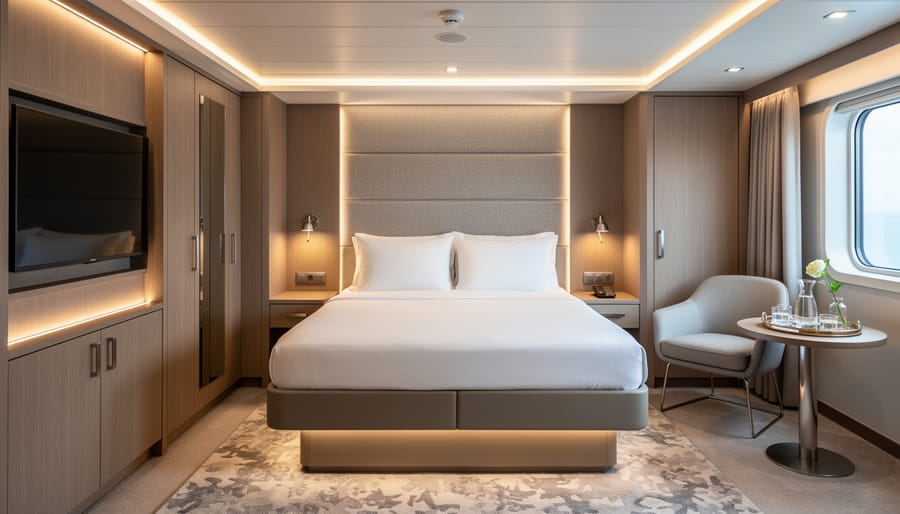
Standard interior staterooms represent the foundation of cruise ship accommodations, yet they’re far from basic. These compact sanctuaries typically span 150 to 185 square feet and showcase remarkably efficient spatial planning. You’ll find a queen or twin bed configuration, built-in storage with clever drawer systems beneath the bed, a compact desk area, and an ensuite bathroom with a shower.
What distinguishes these spaces is the deliberate furniture curation. Cruise lines collaborate with maritime designers to develop multifunctional pieces, think mirrored closets that expand visual depth, wall-mounted reading lights that free bedside surfaces, and modular seating that converts for different uses. The color palettes lean toward sophisticated neutrals: soft grays, warm taupes, and crisp whites that prevent the space from feeling closed in.
Standard doesn’t mean sparse. Premium linens, quality mattresses, flat-screen televisions, and thoughtful amenities like USB charging ports come standard, proving that luxury lies in execution rather than square footage alone.
Premium Interior Staterooms
Premium interior staterooms elevate the windowless cabin experience through deliberate design enhancements that mirror the refinement found in upscale hotel suites. These upgraded accommodations typically offer 15 to 30 percent more square footage than standard interior cabins, allowing designers to incorporate full-sized seating areas, larger wardrobes, and more generous bathroom configurations with upgraded fixtures.
The distinction manifests in material quality and custom detailing. You’ll encounter plush bedding with higher thread counts, designer linens, and premium mattresses that rival boutique hotel standards. Furniture pieces shift from purely functional to statement-making: upholstered headboards with tufted details, handcrafted wood consoles, and ergonomic desk chairs that combine comfort with aesthetic appeal.
Lighting becomes more sophisticated, with dimmable fixtures, accent lighting integrated into millwork, and designer table lamps that create ambiance layers. Many premium interiors feature upgraded technology, larger flat-screen televisions, improved sound systems, and enhanced climate control interfaces.
These cabins often include thoughtful extras: bathrobes, premium toiletries, minibar setups, and priority embarkation privileges that enhance the overall cruise experience while maintaining the value proposition of interior accommodation.
Family and Connecting Interior Staterooms
Family and connecting interior staterooms represent the cruise industry’s most thoughtful response to group travel dynamics, where spatial relationships matter as much as square footage. These configurations typically feature adjoining doorways between two standard interior cabins, creating flexible living arrangements that can accommodate four to six guests while maintaining privacy zones for parents and children.
The design challenge lies in creating cohesive environments from separate spaces. Premium connecting staterooms employ coordinated color palettes and furnishings across both rooms, ensuring visual harmony when the connecting door stands open. Many feature convertible sofa beds and upper berths with custom millwork that conceals sleeping surfaces during daytime hours, transforming compact quarters into surprisingly functional family suites.
These configurations prove particularly valuable for multigenerational travelers seeking proximity without compromise, offering the rare combination of togetherness and retreat within the extravagant cruise ship environment.
Studio Interior Staterooms
Studio interior staterooms represent a revolutionary approach to solo cruise travel, eliminating the dreaded single supplement while delivering thoughtfully curated spaces for independent travelers. These cabins feature ingenious design solutions: Murphy beds that transform into sofas during the day, integrated workspaces for digital nomads, and carefully positioned mirrors that amplify the sense of space. Premium studios often incorporate custom millwork with hidden storage compartments and charging stations seamlessly integrated into nightstands and vanities.
Many cruise lines now offer exclusive studio lounges where solo travelers can socialize, creating a community feel that extends beyond the cabin itself. The design aesthetic skews contemporary, clean lines, neutral palettes with vibrant accent pillows, and modular furniture that adapts to your activities. These spaces prove that luxury isn’t measured in square footage but in how intelligently every inch serves your comfort and lifestyle aboard.
Design Elements That Define Luxury Interior Staterooms
Premium Furniture and Custom Millwork
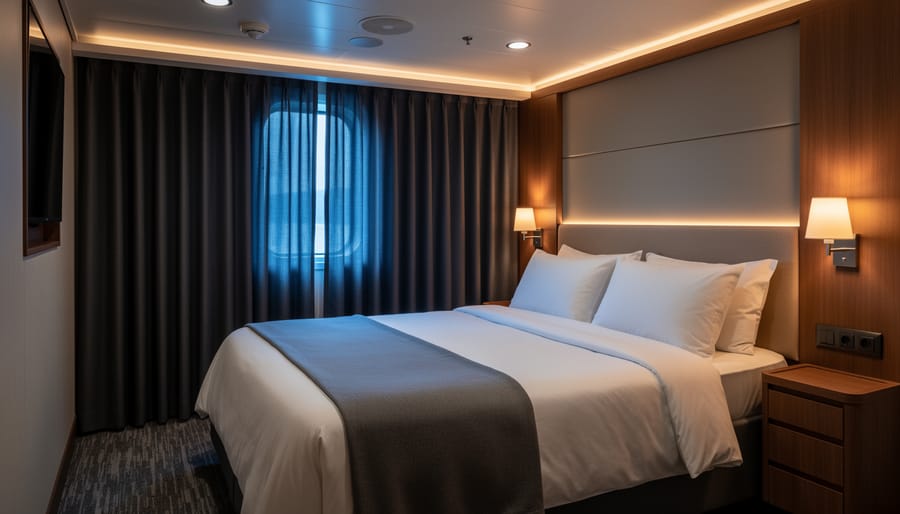
In interior staterooms where every inch matters, custom millwork transforms functional necessities into statements of refined craftsmanship. Leading cruise lines collaborate with celebrated furniture designers to create multifunctional pieces that would feel equally at home in a Manhattan pied-à-terre. Consider the ingenious fold-down desks that appear as seamless wall panels when closed, or the upholstered ottomans concealing generous storage compartments beneath quilted leather surfaces.
Premium millwork extends beyond furniture to architectural elements. Headboard walls integrate reading lights, USB charging ports, and subtle storage niches within continuous panels of book-matched walnut or lacquered composite. Designers specify hidden compartments behind mirrored fascias and drawer systems engineered with soft-close mechanisms that operate silently even in heavy seas.
The sofa becomes a study in spatial efficiency: during the day, a sophisticated seating area with throw pillows in silk blends; by evening, it converts to a sleeping surface through mechanisms invisible to the eye. Every hinge, slide, and pivot receives meticulous attention, ensuring furniture maintains its elegant lines whether stowed or deployed. This approach mirrors the philosophy behind luxury yacht design, where beautiful forms must serve multiple purposes without compromise.
Material Selection and Finishes
The most discerning cruise lines transform interior staterooms through deliberate material choices that rival high-end residential interiors. Rich wood veneers, often walnut, cherry, or zebrawood, introduce warmth and visual depth, their natural grain patterns creating movement across walls and cabinetry. These aren’t generic laminates; they’re carefully book-matched panels that demonstrate craftsmanship.
Textiles layer in tactile luxury. Egyptian cotton linens with high thread counts dress beds, while plush velvet or woven jacquard upholstery adorns seating. Drapery fabrics feature sophisticated weaves that absorb sound, contributing to the peaceful atmosphere essential in windowless spaces.
Stone accents appear strategically, marble or granite surfaces in bathrooms, perhaps a backlit onyx panel as an artistic focal point. These natural materials catch and reflect light beautifully, adding dimension.
Metallic finishes provide the finishing touch. Brushed brass drawer pulls, polished chrome fixtures, or antiqued bronze mirror frames introduce subtle gleam without overwhelming the space. The interplay between matte woods, soft textiles, cool stone, and reflective metals creates visual interest that keeps the eye engaged, proving that thoughtful material selection transforms compact quarters into refined retreats.
Color Psychology and Palette Choices
Color selection in interior staterooms represents one of the most powerful design tools for transforming windowless spaces into serene retreats. Leading cruise lines collaborate with color psychologists and interior designers to develop palettes that actively counteract the absence of natural light and exterior views.
Soft, cool neutrals, creams, pale grays, and subtle blues, dominate sophisticated interior stateroom design because they visually recede, making walls appear farther away than they are. This optical trick expands perceived dimensions significantly. Warmer accent tones in bronze, champagne, or soft amber introduce warmth without closing in the space, while strategic pops of color through artwork or textiles add personality without overwhelming the compact environment. These carefully calibrated palettes work in concert with layered lighting to create depth, dimension, and an atmosphere of tranquil spaciousness.
Uses and Benefits of Interior Staterooms
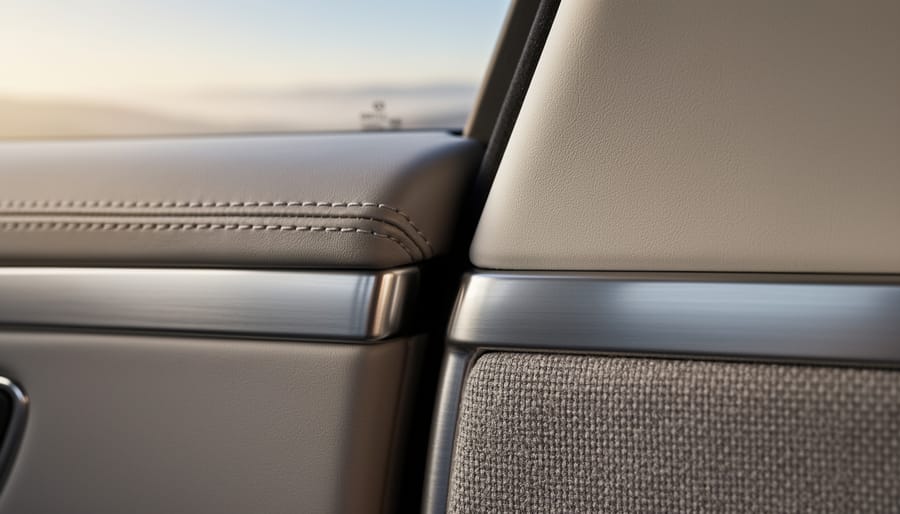
Value-Conscious Luxury Travelers
Interior staterooms represent a strategic choice for discerning travelers who prioritize access to a ship’s world-class amenities over in-cabin views. By selecting these accommodations, guests unlock significant savings, often 30 to 50 percent compared to balcony staterooms, without sacrificing their experience of the vessel’s extravagant public spaces, Michelin-starred dining venues, spa facilities, and entertainment options.
This approach allows travelers to allocate their budget toward shore excursions, specialty restaurants, or premium beverage packages while still enjoying the same designer furnishings and luxury linens found throughout the ship. The cabin itself becomes a refined retreat for rest between activities, thoughtfully appointed with custom millwork and sophisticated finishes that deliver comfort and elegance.
For those who understand that cruise ship experiences extend far beyond stateroom walls, interior cabins offer an intelligent path to accessible luxury, proving that smart design choices and strategic planning can enhance rather than diminish a high-end voyage.
Active Cruisers and Shore-Focused Travelers
For travelers who view their stateroom primarily as a place to refresh and sleep between adventures, interior cabins represent an astute choice that aligns beautifully with an active cruise lifestyle. These accommodations suit guests who rise early for shore excursions, spend afternoons exploring the ship’s amenities, and retire late after evening entertainment.
The absence of windows becomes irrelevant when you’re barely in your cabin during daylight hours. Instead of paying premium rates for ocean views you won’t see, you can allocate those savings toward spa treatments, specialty dining experiences, or upgraded shore excursions that truly define your voyage.
Interior staterooms for this traveler profile function as sophisticated base camps rather than destination rooms. They provide everything essential, comfortable bedding, climate control, storage for excursion gear, without the unnecessary cost of panoramic vistas. The cabin serves its purpose: a well-designed retreat that supports your adventures rather than competing with them for your attention and budget.
Superior Sleep Quality
The complete absence of exterior light creates an unexpected sanctuary for rest. While balcony cabins contend with dawn breaking over the ocean and hallway light seeping through door gaps, interior staterooms deliver absolute darkness, a quality sleep scientists consistently identify as essential for deep, restorative rest.
This blackout environment proves particularly valuable during repositioning cruises that cross multiple time zones or itineraries with early port arrivals. Your circadian rhythm remains undisturbed by shifting sunrise times or the brilliant Caribbean sun that floods exterior cabins at 5:30 AM.
The interior location offers another sleep advantage: insulation from exterior noise. Positioned away from the wind, waves, and anchor mechanisms that can disturb waterside accommodations, these staterooms maintain quieter conditions throughout the night. Combined with sophisticated soundproofing between cabins and temperature control you adjust to personal preference, interior staterooms function as dedicated sleep chambers where luxury manifests through the quality of rest rather than the presence of a view.
What to Look for When Selecting an Interior Stateroom
Selecting the right interior stateroom requires a discerning eye for design details and a clear understanding of your personal priorities. While these windowless accommodations may appear similar on deck plans, subtle differences in location, layout, and appointments can dramatically affect your onboard experience.
Location proves paramount when evaluating interior staterooms. Mid-ship cabins on middle decks offer the most stability, minimizing motion for those sensitive to movement. Avoid cabins directly beneath nightclubs, theaters, or pool decks unless you’re a particularly sound sleeper. Similarly, staterooms adjacent to or above crew areas may experience noise during early morning operations. Forward and aft locations often come at lower prices but subject occupants to more pronounced ship movement in rough seas.
Examine the specific cabin configuration carefully. Not all interior staterooms within the same category offer identical layouts. Some feature split bathrooms with separate toilet and shower compartments, a design innovation that allows two guests to prepare simultaneously. Others may include a sofa that converts to additional sleeping space, essential for families. Review the square footage, as variations of ten to twenty square feet can make a meaningful difference in how spacious the room feels.
- Precise location relative to elevators, stairs, and potential noise sources
- Bathroom configuration and counter space for personal items
- Storage capacity including closet depth, drawer quantity, and under-bed clearance
- Bed arrangement options and whether they can be separated or must remain fixed
- Electrical outlet placement and USB charging port availability
- Quality of mattress, linens, and pillows based on cruise line standards
Beyond physical attributes, assess the aesthetic cohesion of the space. Request photographs of the actual stateroom category, not generic marketing images. Notice whether the color palette feels calming, whether the lighting appears adjustable for different moods, and whether the furniture scale suits the room proportions. Well-designed interior staterooms employ mirrors strategically to amplify light and create depth, use vertical space efficiently with overhead storage, and incorporate materials that feel luxurious to the touch.
Consider your cabin usage patterns honestly. If you plan extensive time reading, working, or relaxing in your stateroom, prioritize comfortable seating, adequate task lighting, and superior ventilation. If the room serves primarily as sleeping quarters, focus on bed quality and blackout capability for undisturbed rest.
Frequently Asked Questions
Interior staterooms spark numerous questions among first-time cruisers and design-conscious travelers alike. Understanding the realities of these sophisticated windowless accommodations helps you make confident decisions aligned with your travel style and comfort needs.
Will I feel claustrophobic in an interior stateroom?
Most travelers don’t experience claustrophobia in well-designed interior staterooms, thanks to thoughtful lighting design, strategic mirror placement, and spatial planning that creates visual openness. If you’re sensitive to enclosed spaces, book a cabin with higher ceilings or consider a premium interior option with enhanced spatial design.
How do interior staterooms maintain air quality without windows?
Advanced HVAC systems circulate fresh air continuously throughout interior cabins, often providing better climate control than oceanview rooms. These systems filter and refresh the air multiple times per hour, maintaining optimal temperature and humidity levels.
Are interior staterooms significantly smaller than oceanview cabins?
Interior staterooms are often similar in square footage to standard oceanview cabins on the same ship, typically ranging from 150 to 185 square feet. The primary difference lies in the view, not necessarily the functional living space.
Can I tell what time of day it is from inside an interior stateroom?
Without natural light cues, you’ll rely on your phone, the ship’s clock, or your watch to track time. Many travelers appreciate this disconnection, finding it easier to maintain sleep schedules across time zones and enjoy complete darkness for rest.
How much money can I save by choosing an interior stateroom?
Interior staterooms typically cost 30 to 50 percent less than comparable oceanview or balcony cabins on the same sailing. This difference allows you to allocate your budget toward specialty dining, shore excursions, spa treatments, or upgrading to a longer voyage.
The value proposition becomes clear when you consider your cabin primarily as sleeping quarters and a place to refresh between experiences. Active cruisers who participate in ship activities, dine at multiple venues, and explore ports extensively often find they spend minimal waking hours in their stateroom regardless of cabin type. The savings from booking an interior cabin can fund experiences that create lasting memories far beyond what any view from your room might offer.
Design quality matters more than window presence for many sophisticated travelers. A beautifully appointed interior stateroom with custom millwork, premium linens, and thoughtful lighting often provides a more luxurious experience than a dated oceanview cabin with worn furnishings. Evaluate the specific stateroom’s design credentials and recent renovation status rather than dismissing all interior options categorically.
how it works
The mechanics of interior staterooms center on creating comfortable, luxurious environments without natural light or exterior ventilation. Advanced climate control systems draw fresh air through dedicated ducts, cycling it through HEPA filters before delivering precisely temperature-controlled atmosphere throughout the cabin. These systems operate silently, maintaining consistent conditions regardless of the ship’s position or outside weather.
Designers compensate for the absence of windows through sophisticated lighting schemes that layer ambient, task, and accent illumination. Dimmable overhead fixtures mimic natural daylight cycles, while reading sconces and under-cabinet strips provide functional brightness. Some premium staterooms incorporate virtual windows, high-definition screens displaying real-time exterior views synchronized with the ship’s position.
Space efficiency drives every design decision. Murphy beds fold into walls, revealing sitting areas by day. Built-in storage extends floor to ceiling, with custom compartments for luggage, clothing, and personal items. Mirrors strategically placed opposite the entry create visual depth, making compact quarters feel surprisingly spacious. The result is a self-contained retreat where climate, light, and layout work in concert to deliver comfort that rivals rooms twice the size.
Types or components
Interior staterooms comprise several interconnected design components that work in harmony to create a comfortable, luxurious retreat. The spatial envelope itself, typically ranging from 150 to 185 square feet, forms the foundation, with precise architectural planning determining traffic flow and functional zones. The sleeping zone anchors the space, featuring a queen or twin bed configuration with premium linens and an upholstered headboard that serves as both aesthetic focal point and sound insulation.
Storage solutions represent another critical component: built-in wardrobes with specialized hanging configurations, pull-out drawers integrated beneath the bed platform, and overhead compartments finished in matching veneers. The bathroom module, though compact, incorporates space-efficient fixtures, a corner shower with frameless glass, floating vanity, and illuminated mirror, all finished in moisture-resistant materials that maintain aesthetic cohesion.
The entertainment console integrates television, desk surface, and charging stations within a single millwork piece, while the seating area might feature a convertible loveseat or accent chair paired with a small cocktail table. Lighting infrastructure includes recessed ceiling fixtures, reading sconces, and accent lighting that creates layers of illumination throughout the space.
Cruise interior staterooms represent a masterclass in maximizing design potential within constrained spaces. These windowless retreats prove that luxury doesn’t require a view, it thrives on intention, craftsmanship, and the artful orchestration of materials, lighting, and spatial flow. When designers approach an interior cabin with the same reverence they’d bring to a penthouse suite, they create environments that feel expansive, refined, and deeply restful.
The strategic value extends beyond the immediate budget advantages. By selecting an interior stateroom, you’re making a conscious choice to invest in experiences rather than square footage you’ll rarely occupy. Your cabin becomes a sophisticated sanctuary for sleep and preparation, while the ship’s public spaces, restaurants helmed by celebrity chefs, lounges adorned with museum-quality art, sun-drenched decks overlooking the ocean, become your true living areas.
Modern interior staterooms challenge outdated assumptions. They’re not compromises. They’re carefully calibrated luxury accommodations where every inch serves a purpose, where layered lighting compensates beautifully for the absence of daylight, and where premium furnishings rival what you’d find in upscale urban hotels.
As cruise lines continue partnering with visionary designers, the distinction between cabin categories blurs. What remains constant is this: a well-designed space, regardless of windows, can deliver comfort, elegance, and the restorative rest that transforms a voyage into something extraordinary.