
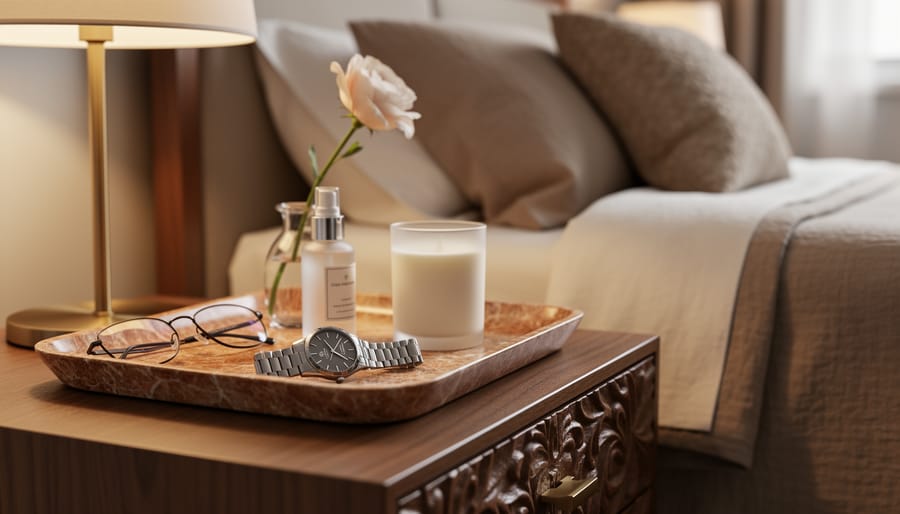
A decorative tray transforms your nightstand from a cluttered catch-all into a curated vignette of personal luxury. The right piece, typically ranging from 8 to 12 inches across, corrals essentials like your watch, reading glasses, and skincare while creating visual boundaries that bring order to your most intimate space. The best nightstand trays balance sculptural presence with shallow practicality, often no more than an inch deep, allowing easy access without overwhelming the compact real estate beside your bed.
This deceptively simple accessory serves as the anchor for what we call “intentional repose” in bedroom design. Rather than letting objects accumulate haphazardly, the tray establishes a deliberate composition, a small stage where each item earns its place. Think of it as jewelry for your furniture, a finishing detail that signals thoughtfulness in every corner of your home.
The challenge lies in selecting a piece that complements both your nightstand’s material and your bedroom’s overall aesthetic vocabulary. Marble trays introduce cool sophistication against warm wood surfaces. Hand-carved wooden versions echo natural textures and bring organic warmth. Mirrored or metallic options reflect ambient light, adding subtle luminosity to evening routines. The material conversation between tray and furniture matters deeply.
Beyond mere containment, your nightstand tray becomes a nightly ritual touchpoint, the place where you set down the day and retrieve the morning. When styled with precision, pairing perhaps a small vase with a single bloom, a signature candle, and your essentials, it creates a hotel-suite feeling of considered luxury in your own bedroom.
Why a Decorative Tray Elevates Your Nightstand
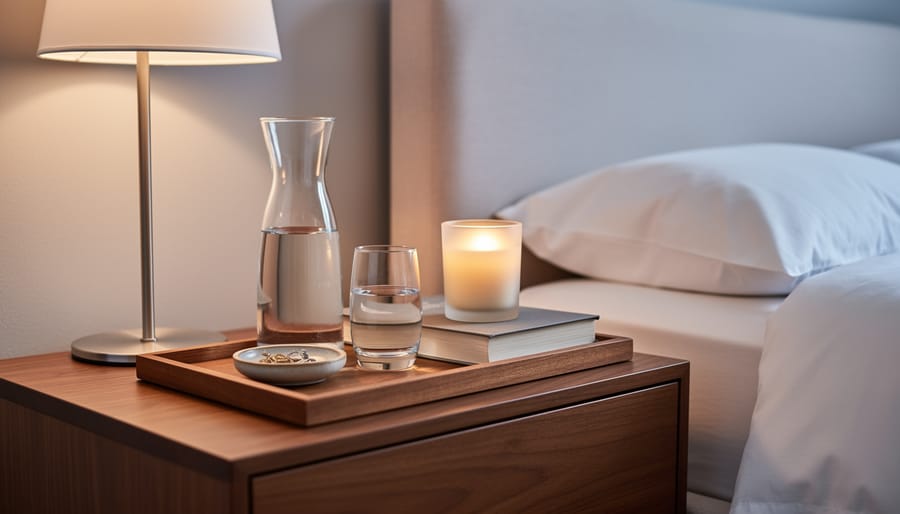
A nightstand tray transforms the bedside from a catch-all surface into a deliberate composition. Without one, your phone, reading glasses, watch, and small essentials scatter across the tabletop, creating visual noise that disrupts the serenity a bedroom should offer. The tray creates an invisible boundary that contains these necessities, corralling them into a single, defined zone while leaving surrounding space open and calm.
Beyond simple organization, the tray establishes visual hierarchy. It signals which objects deserve prominence and which recede into supporting roles. A carefully chosen piece in polished marble or hand-finished brass becomes a sculptural element itself, catching light and drawing the eye upward from flat surfaces. This layering of materials introduces textural richness that elevates the entire nightstand composition, the cool gleam of lacquer against linen lampshade fabric, the grain of walnut against ceramic, the weight of stone anchoring lighter elements above it.
The tray also serves as a bridge between purely functional storage and considered artistry. Items you need within arm’s reach at night, medication, lip balm, a small notebook, no longer compromise the room’s visual integrity. Instead, they become part of a curated still life that reflects your personal aesthetic while maintaining accessibility. This dual performance separates luxury interiors from merely expensive ones: beauty and utility exist in balance rather than conflict.
The material choice itself communicates volumes. A natural wood tray brings organic warmth and invites touch. High-gloss lacquer in deep jewel tones creates drama and modern sophistication. Aged brass or bronze develops patina over time, embedding your nightstand with a sense of collected history. These selections connect to broader design narratives, often sourced through luxury brand partnerships that bring distinctive artisan perspectives to intimate spaces. The right tray doesn’t just organize, it anchors your nighttime ritual in tangible beauty you experience every evening and morning.
Choosing the Perfect Tray for Your Nightstand
Material and Finish Considerations
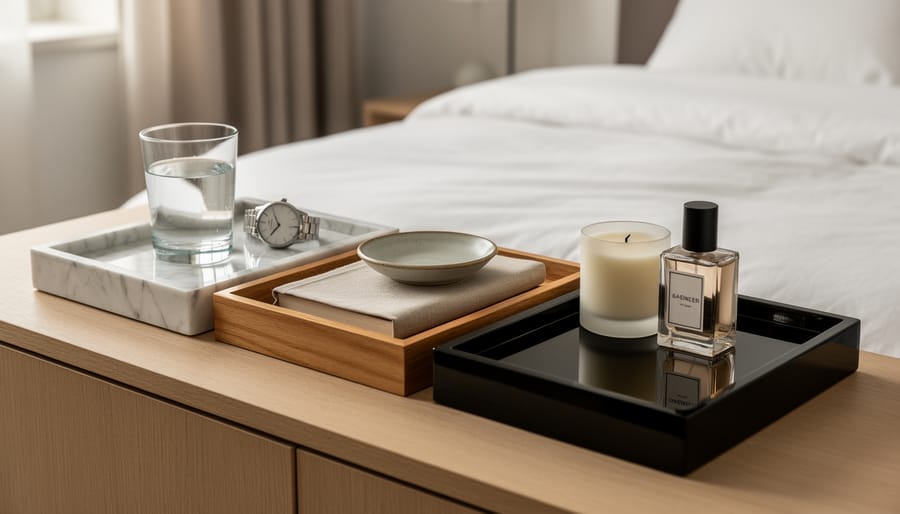
The material you choose establishes the emotional tone of your nightstand and determines how the tray interacts with light throughout the day. Polished marble brings instant glamour, its cool veining and substantial weight signal luxury while reflecting ambient light in soft, diffused patterns. White Carrara marble harmonizes with crisp linens and creates luminous contrast against dark wood furniture, while dramatic black Marquina marble anchors lighter color schemes with sculptural presence.
Natural wood trays introduce organic warmth that softens the bedroom’s atmosphere. Walnut and teak offer rich, grounding tones that pair beautifully with linen textiles and brass accents, while lighter woods like ash or white oak maintain an airy Scandinavian sensibility. The grain patterns become visual interest, especially when bedroom lighting shifts from morning sun to evening lamplight.
Lacquered surfaces deliver modern sophistication through their glass-like finish. High-gloss black lacquer creates mirror-like reflections that amplify candlelight and make small spaces feel larger, while matte lacquer in sage or charcoal provides subtle elegance without competing for attention. These finishes photograph exceptionally well and maintain their appearance with minimal care.
Metal trays introduce reflective shimmer that evolves with your lighting. Brushed brass warms the space and complements gold-toned fixtures, while polished silver or nickel reads cool and contemporary. Antiqued bronze brings old-world romance that pairs effortlessly with velvet and jewel tones. Consider how your bedside lamp will play across the metal surface at night, the interaction becomes part of the design.
Scale, Shape, and Proportion
The most successful nightstand tray occupies roughly one-third to two-thirds of your surface area. Too small, and it reads as an afterthought. Too large, and it crowds the space where you actually need to set down a water glass or reach for your phone in the dark. Measure your nightstand width and aim for a tray that leaves at least four inches of breathing room on each side.
Shape choice dramatically shifts the visual energy. Rectangular trays create structure and work beautifully on square or rectangular nightstands, their parallel lines reinforcing architectural order. Round or oval trays soften angular furniture and feel more organic, particularly effective in feminine or transitional bedrooms where you want fluid movement rather than rigid geometry.
Handles deserve consideration beyond aesthetics. They facilitate easy repositioning when you’re changing linens or dusting, but they also consume precious real estate and can snag fabrics. If you frequently rearrange, prioritize functional handles. If your tray remains stationary, a clean handleless design maximizes usable surface and maintains visual simplicity. Your actual bedroom habits should guide this choice.
Aligning with Your Design Aesthetic
Your nightstand tray should speak the same design language as your bedroom. For spaces rooted in minimalism, consider handleless lacquered trays or simple stone slabs that disappear into the aesthetic. Ornate vintage brass or silver trays with detailed edges amplify traditional or eclectic interiors. If your bedroom celebrates craftsmanship, seek sculptural pieces from independent designers who bring artisan-level detail to functional objects. Statement trays from established luxury brands anchor contemporary and transitional spaces with confident design authority. InWood Furniture’s relationships with both emerging makers and renowned studios mean access to trays that function as small artworks, transforming your nightstand into a reflection of sophisticated, personal taste rather than generic bedroom styling.
What to Place on Your Nightstand Tray
The Art of Layering and Composition
Start with your most essential item and build around it. A small clock or a delicate lamp becomes the anchor, typically the tallest element, then layer shorter objects to create gentle rhythm across the tray’s surface. Three pieces work better than four; five looks deliberate where six feels accidental.
Height variation matters more than quantity. Place a slim bud vase beside a squat candle, then add something flat like a small dish. Your eye travels naturally across these different elevations, finding visual interest without confusion.
Negative space prevents the tray from reading as clutter. Leave at least one-third of the tray’s surface empty, allowing each object breathing room. This restraint separates curated arrangement from nightstand chaos.
Edit by removal rather than addition. If you’re questioning whether an item belongs, it probably doesn’t. The nightstand tray serves your sleep sanctuary, every object should either soothe you before bed or delight you upon waking. Remove anything that creates visual noise or fails this simple test. A tray holding just two perfect things always outperforms one crowded with seven mediocre choices.
Styling Formulas for Different Bedroom Aesthetics
Modern Minimalist Approach
The modern minimalist nightstand tray demands restraint and precision. Select a tray in matte white, pale grey concrete, or natural limestone, materials that recede into calm rather than announce themselves. The surface should be utterly smooth, with clean edges and no ornamental detail competing for attention.
Your composition centers on three carefully chosen objects, never more. Consider a single sculptural vessel in muted ceramic holding one stem, a slim hardcover book with neutral binding, and a small brass catchall for jewelry. Each item earns its place through form rather than decoration. Negative space becomes as important as the objects themselves, allowing each piece to breathe and the eye to rest.
This approach draws from broader decorative tray ideas that prioritize edited curation over abundance. The result feels intentional yet effortless, transforming the nightstand into a study in quietude that supports deep rest rather than visual stimulation.
Glamorous Maximalist Styling
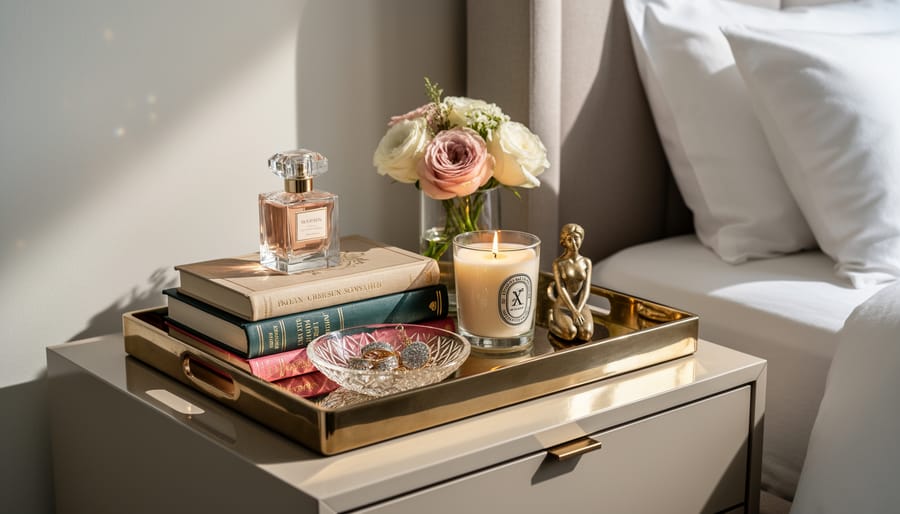
For those who embrace drama and richness, a mirrored or brass tray becomes the foundation for an unapologetically luxurious tableau. Layer a cut-crystal carafe beside a vintage perfume bottle, add a jewel-toned velvet ring dish, and perhaps a small gilded frame holding a cherished photograph. The reflective surface amplifies light from your bedside lamp, creating luminous depth even in a compact arrangement. The key to preventing visual chaos lies in limiting your color palette, choose two or three complementary jewel tones rather than introducing every hue, and ensuring each piece possesses inherent beauty and craftsmanship. This approach transforms your nightstand into a personal treasure gallery that feels collected rather than cluttered.
Organic Contemporary
Organic contemporary styling centers the nightstand tray as a grounding ritual space. Choose a tray in raw-edged walnut, bleached ash, or honed travertine, materials that carry visible grain or natural variation. Arrange a single ceramic bud vase with eucalyptus or dried grasses, a stoneware dish for rings, and perhaps a small wooden bowl holding river stones or crystals. The palette stays neutral: ivory, sand, charcoal, soft greens. Textures do the work here, linen coasters, unglazed pottery, matte finishes, creating tactile richness without visual noise. This approach transforms the nightstand into a calm, earthy anchor that reinforces the bedroom as sanctuary, connecting your waking and sleeping moments to organic rhythms rather than synthetic perfection.
Classic Transitional
Classic transitional styling strikes the perfect balance between enduring elegance and fresh sensibility. Begin with a tray in refined materials that transcend trend cycles, burnished leather with contrast stitching, richly finished walnut, or brushed nickel with subtle detailing. These materials possess inherent gravitas without announcing a specific era.
The composition itself should marry old and new with equal weight. Pair a sculptural modern carafe with a vintage brass clock. Place contemporary hand-thrown ceramics alongside a classic leather-bound journal. This tension between periods creates visual interest while maintaining sophisticated restraint.
Color palettes lean toward neutrals with strategic warmth: soft grays, warm taupes, deep navy, or forest green as accent notes. Avoid stark contrasts or overly bright hues that might date the arrangement.
This approach proves particularly forgiving as your tastes evolve. The foundation remains constant while individual objects can rotate seasonally or as you acquire new pieces. You’re building a collection rather than creating a static tableau, resulting in a nightstand that feels both polished and personally inhabited, never too precious to use, never too casual to admire.
Seasonal and Occasional Refresh Ideas
Your nightstand tray offers an intimate canvas for marking the seasons without overwhelming your bedroom sanctuary. Small, intentional shifts in what sits on this surface keep the space feeling alive and personally connected to the rhythms of your life.
Spring invites fresh botanicals, a single stem of cherry blossom in a minimalist vase or a sprig of jasmine that scents your evening ritual. Summer calls for lighter palettes: swap heavier objects for sea glass, coral fragments, or a small bowl of polished stones collected during travels. The fragrance shifts too, from winter’s amber and sandalwood to summer’s fig or neroli.
As autumn arrives, introduce warmer metallic accents alongside deeper tones. A vintage brass box replaces summer’s lighter vessels. Perhaps a small leather-bound journal appears, or a candle in burnt sienna. Winter welcomes richer textures, a velvet jewelry case, darker wood accents, or a small sculptural object in bronze that catches low winter light.
These rotations need not be elaborate. Changing a single object every few weeks maintains visual interest without creating decision fatigue. The practice becomes meditative, a quarterly edit that removes what no longer serves the space and introduces something that reflects where you are now. Your nightstand tray becomes a personal calendar of sorts, subtly marking time through objects you touch at day’s end and first light.
Common Nightstand Tray Styling Questions
Styling a decorative tray beautifully is one thing, living with it gracefully is another. These questions address the practical realities of maintaining an elevated nightstand aesthetic while using the space daily.
How do I keep my tray from looking cluttered?
Limit yourself to five items maximum, and ensure each serves a genuine purpose or brings real visual joy. Remove anything that doesn’t earn its place, and leave at least one-quarter of the tray surface empty to create breathing room.
Should the tray match my lamps or other nightstand accessories?
No, but it should complement them. Aim for visual conversation rather than exact matching, if your lamp base is brass, a tray with subtle gold accents creates harmony without looking too coordinated. Different materials in the same tonal family feel more collected and sophisticated.
How do I protect wood surfaces beneath the tray?
Place a thin felt pad or silk fabric underneath metal or stone trays to prevent scratching. For leather or lacquered trays, the material itself provides gentle protection, though felt dots on the corners add extra insurance.
Can I use a decorative tray if my nightstand is small?
Absolutely. Choose a smaller tray that leaves a few inches of surface visible on all sides, and limit contents to three carefully selected items. The constraint actually forces more thoughtful curation, which often results in stronger visual impact.
How often should I refresh the styling?
Seasonal changes feel natural without requiring constant attention. Swap flowers, adjust fragrances, or rotate one decorative object every few months to keep the space feeling intentional rather than stale.
The most common styling challenge comes from trying to accommodate too many functions on a single surface. If your nightstand tray begins accumulating daily detritus, charging cables, receipts, random coins, designate a drawer or bedside basket for those transient items. The tray remains your curated display, not a catch-all.
Material maintenance varies significantly. Marble trays resist water rings but can stain from acidic substances, so wipe spills immediately. Lacquered surfaces show fingerprints but clean easily with a soft cloth. Brass and silver develop patina over time, which many find desirable, though metal polish restores original shine when preferred. Wood trays benefit from occasional conditioning with furniture wax to maintain their luster.
When sourcing your perfect tray, the experience matters as much as the object itself. Seamless luxury shopping allows you to explore curated collections from independent artisans and established designers worldwide, bringing distinctive pieces to your bedroom that genuinely reflect your aesthetic sensibility rather than settling for mass-market options.
A thoughtfully styled nightstand tray transforms one of the most intimate spaces in your home. This small investment creates disproportionate impact, turning the surface you encounter first each morning and last each evening into a curated moment of beauty that grounds your daily rhythms.
Consider your nightstand a personal gallery, a carefully edited collection that reflects your aesthetic sensibilities and life’s quiet pleasures. The objects you choose to display here speak to who you are when the world isn’t watching. A vintage perfume bottle, a handmade ceramic vessel, a cherished photograph in an heirloom frame, these aren’t mere decorations but anchors of memory and meaning.
The right tray becomes the frame for this evolving composition, elevating functional necessities into intentional design. Whether you gravitate toward the cool sophistication of polished marble, the organic warmth of live-edge wood, or the reflective glamour of brass, your selection sets the tone for the entire vignette.
InWood Furniture’s relationships with independent artisans and established luxury brands offer access to distinctive trays that transcend ordinary retail offerings. Our personalized approach connects you with pieces that align precisely with your vision, bringing global craftsmanship and exclusive designs to your most personal space.