
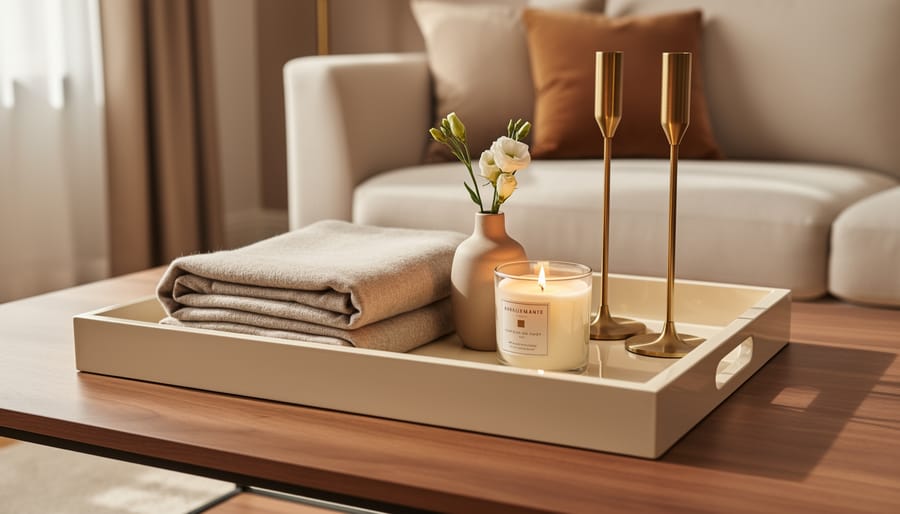
A well-styled decorative tray transforms scattered objects into a curated vignette, anchoring a room’s personality while corralling clutter in plain sight. The twelve ideas ahead span every room in your home, from coffee table centerpieces that ground your living area to bedside trays that turn nightstands into intimate retreats. Each concept pairs surface and styling strategy with specific material and accessory guidance, so you leave with clarity on what works where and why.
The homes we live in now demand furniture that earns its place. A tray isn’t passive décor. It’s an editing tool. It draws the eye to what matters, hides remotes and lip balm in composed arrangements, and gives transient objects a permanent address. When styled with intention, trays solve the friction between aspiration and real life, between the magazine spread and the keys you actually set down at day’s end.
What follows is curated counsel from designers who understand luxury as livability. We’ve partnered with artisans and tastemakers who’ve dressed homes from Palm Beach to the Pacific Northwest, and their collective wisdom distills into twelve distinct applications. You’ll see how a lacquered tray anchors a bar cart, how natural rattan softens a kitchen island, and how mirrored surfaces amplify light in narrow entryways. Material choice, scale, and layering principles run through every section, because the difference between tray as afterthought and tray as anchor point lies in those details.
Whether you’re refreshing a single tabletop or rethinking your entire entry sequence, these ideas offer a practical roadmap rooted in enduring design principles and the textures that make a house feel unmistakably yours.
How We Curated This Collection of Tray Ideas
Every idea in this collection passed through a rigorous curation filter grounded in collaboration with award-winning interior designers and InWood Furniture’s network of independent artisans. We selected trays that demonstrate genuine versatility, pieces equally at home in a Park Avenue penthouse as in a countryside estate, capable of anchoring both modern minimalism and richly layered traditional interiors. Material integrity came first: walnut with book-matched grain, hand-hammered brass that ages beautifully, marble cut from single slabs. We rejected fast-fashion interpretations in favor of objects rooted in timeless design principles, the kind you inherit rather than replace.
Real-world styling potential guided every choice. Each idea addresses a specific surface and solves an actual organizational challenge while elevating visual appeal. Our luxury brand partnerships with celebrated European and North American designers ensure access to pieces you won’t find in mass retail channels. The result is twelve approachable transformations that respect both your intelligence and your investment in lasting beauty.
1. The Layered Coffee Table Tray, Curate a Living Gallery
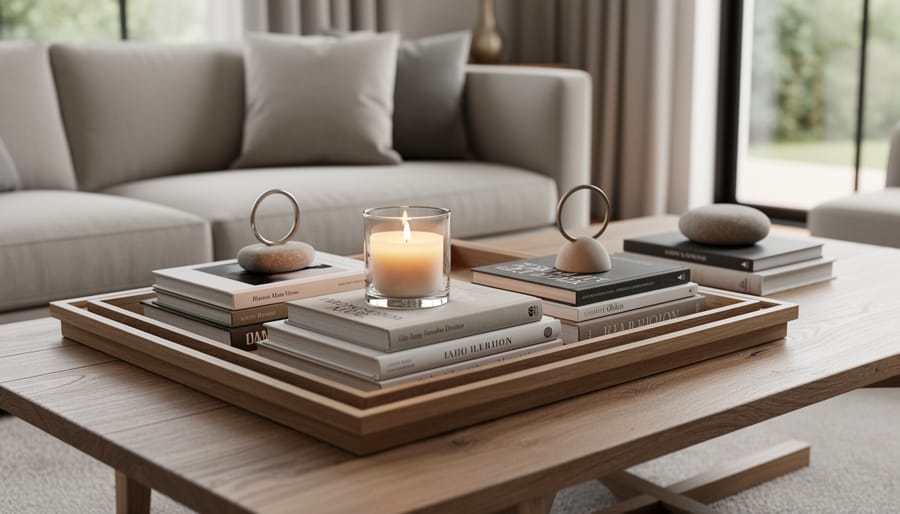
A large rectangular tray transforms your coffee table into a living gallery where art meets intention. Rather than scattering objects across the surface, the tray creates a defined stage, a deliberate boundary that invites the eye to linger and discover. This simple addition turns casual arrangement into curated composition.
The secret lies in height variation. Anchor the vignette with a substantial element: a sculptural ceramic vase, a stack of oversized art monographs, or a contemporary glass candleholder. Build downward from there, layering in medium-height pieces like a small potted orchid or a vintage trinket box, then finish with low elements, a geode, a collection of matchbooks, perhaps a single objet d’art that sparks conversation. Each tier guides the eye in a gentle cascade.
Material choice sets the mood entirely. A mirrored tray styling amplifies light and lends Old Hollywood glamour, doubling the visual impact of every object placed upon it. Lacquered wood in deep espresso or navy brings warmth and grounds brighter accents, while brushed brass or antique bronze introduces metallic whisper without overwhelming.
Balance color deliberately. If your tray is neutral, let the objects provide chromatic interest, jewel-toned book spines against matte ceramics. Conversely, a boldly hued tray demands restraint in its contents. Texture matters equally: pair smooth lacquer with rough linen-bound books, polished metal with organic stone. The tray doesn’t just organize, it orchestrates.
2. The Ottoman Serving Solution, Functionality Meets Elegance
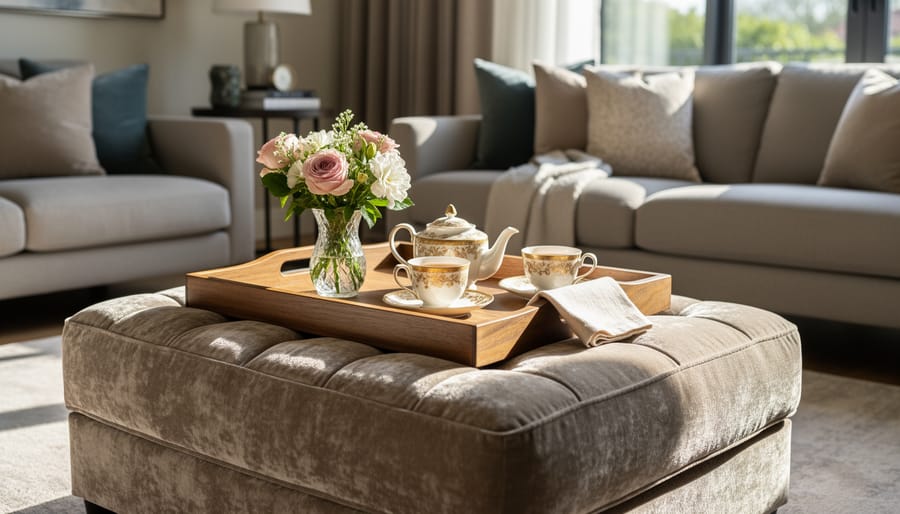
The ottoman has long played a supporting role in living rooms, until you place a firm, flat tray on its cushioned surface and watch it become the evening’s star. This simple pairing transforms soft upholstery into a stable serving station for cocktails, appetizers, or a perfectly plated cheese board, all while protecting the fabric from spills and rings. The contrast between yielding textile and solid material creates a visual tension that feels both unexpected and utterly logical, much like the layered surfaces you see in sophisticated hotel lobby design where every element serves dual purposes.
Leather trays bring warmth and grip, their natural texture preventing glasses from sliding during animated conversation. Marble introduces cool elegance and substantial weight that anchors the arrangement, while resin offers lightweight durability in finishes ranging from translucent amber to matte charcoal. Each material protects the ottoman’s upholstery while elevating its presence in the room.
In open-plan living spaces where furniture must work harder, this idea shines brightest. The ottoman-tray combination floats effortlessly between seating zones, adapting to changing needs throughout the day, coffee service in the morning, drinks during a gathering, a styled vignette when guests have left. It’s entertaining infrastructure disguised as décor, proving that the most functional pieces often deliver the greatest glamour.
3. The Vanity Perfume Display, A Touch of Parisian Chic
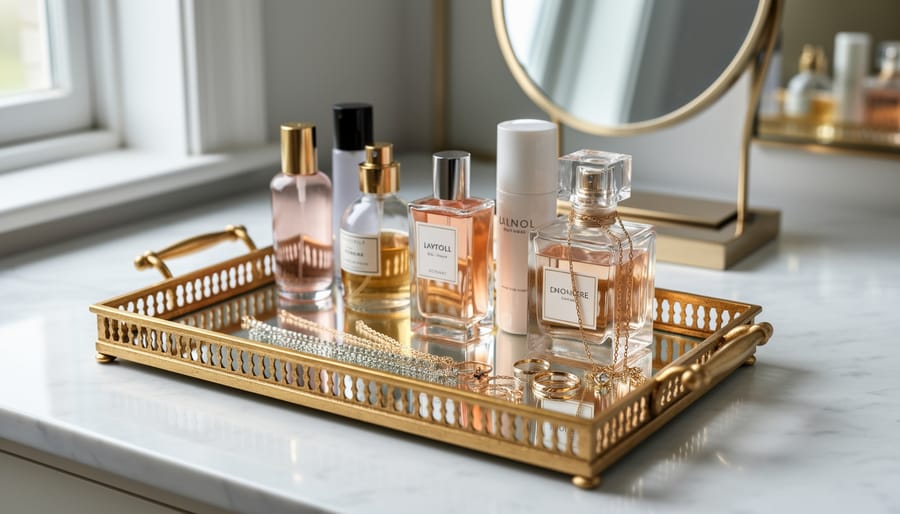
The vanity tray remains one of the most enduring decorative ideas because it transforms daily grooming into a ritual of beauty. A mirrored or gilded tray anchors your fragrance bottles, jewelry boxes, and cosmetic essentials in a single, cohesive display that evokes the dressing tables of Parisian ateliers. Instead of scattered products cluttering marble or wood surfaces, everything finds its place within a defined perimeter that catches light and elevates the mundane.
Mirrored trays amplify natural light and reflect the cut-glass silhouettes of perfume flacons, creating a jewel-box effect that feels both luxurious and organized. Gilded trays in brass, gold leaf, or antiqued bronze add warmth and a sense of heritage, especially when paired with Art Deco vanity accessories or vintage compacts. The frame itself becomes part of the composition, lending structure to asymmetrical arrangements of tall atomizers beside squat powder jars.
Beyond aesthetics, the practical benefit is immediate: a single tray protects delicate surfaces from spills and residue, and you can lift the entire tableau to wipe down your vanity in seconds. Independent designers craft heirloom-quality pieces that go far beyond mass production, incorporating hand-applied finishes, inlaid mother-of-pearl, or sculptural handles that double as objets d’art. These trays invite personalization, whether you curate a monochromatic palette or mix metals and textures that tell your own style story. The result is a vanity display that feels edited, intentional, and unmistakably yours.
4. The Entryway Catch-All, First Impressions That Welcome
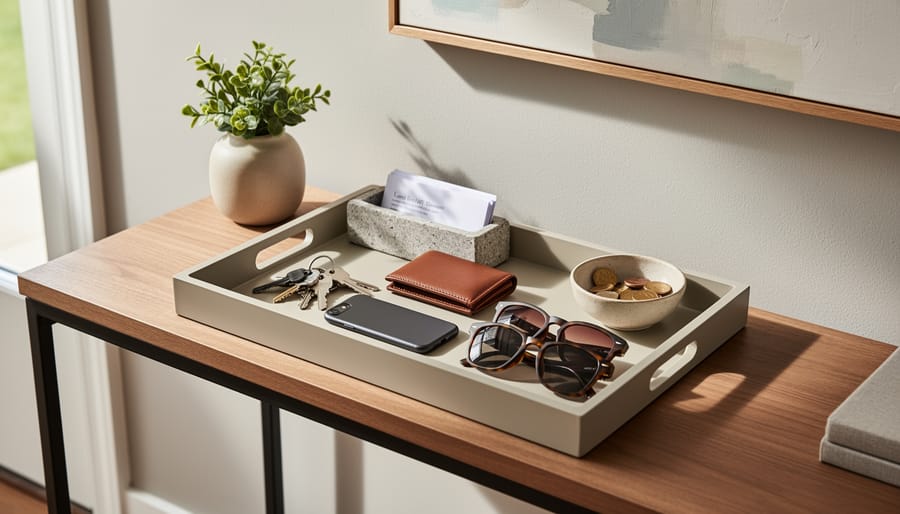
The entryway sets the emotional tone for your entire home, and a thoughtfully placed decorative tray transforms that first impression from chaotic to composed. Position a carefully chosen tray on your console table to create an intentional landing zone for the daily essentials that otherwise scatter across surfaces: keys, sunglasses, outgoing mail, a lipstick for touch-ups before departure.
This simple addition carries profound psychological weight. When you return home to visual order rather than clutter, your nervous system registers calm. Guests notice the deliberate curation, reading it as a signal of refinement throughout the rest of your space. The tray delineates purpose without rigidity, offering just enough structure to maintain harmony.
Material choice amplifies this welcome. A hammered metal tray in antique brass or brushed nickel catches ambient light, creating subtle movement that draws the eye without overwhelming a compact entry. Artisan ceramic pieces in muted glazes or hand-painted motifs introduce organic warmth, especially when paired with a single succulent or seasonal stem. For marble or stone compositions, the weight itself communicates permanence and luxury.
Scale matters tremendously in this application. A tray too large overwhelms a narrow console, while one too petite looks lost and fails its organizing mission. InWood Furniture’s personalized shopping journey addresses precisely this challenge. Our customer service team considers your console dimensions, door swing clearance, and household flow to recommend proportions that feel both generous and intentional, ensuring your entry whispers welcome before a single word is spoken.
5. The Bedside Tray Tableau, Nighttime Luxury in Reach
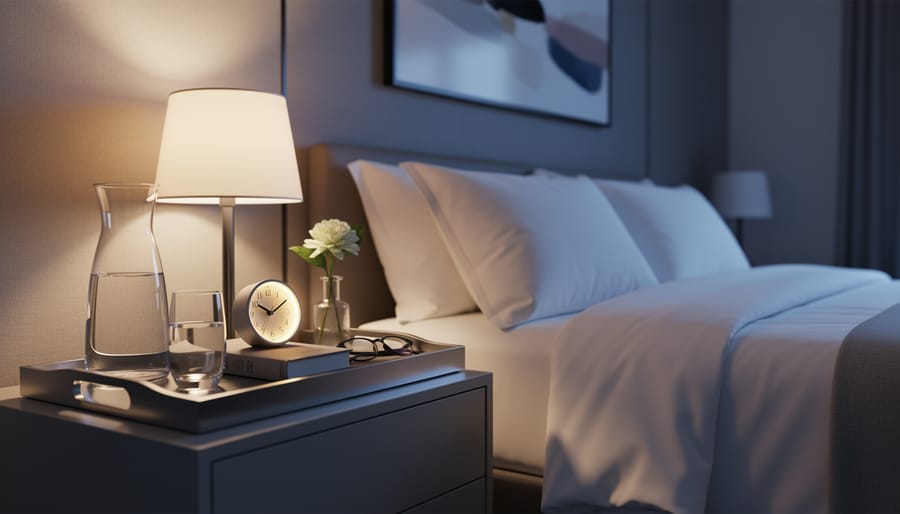
The bedside table is one of the most personal surfaces in your home, a place where function and intimacy converge each evening. A well-chosen tray transforms this intimate space into a thoughtfully composed tableau that serves both your practical needs and your aesthetic sensibilities.
Consider a narrow tray in warm walnut or lacquered linen, proportioned to leave breathing room on your nightstand. This becomes your nightly staging ground: a slender reading lamp that casts the perfect glow, a crystal or glass water carafe within easy reach, and a bud vase holding a single stem or small seasonal arrangement. The tray corrals these essentials while preventing water rings and dust accumulation.
The beauty lies in the ritual. Each object you select speaks to your personal routine, perhaps a cherished bookmark, a small dish for jewelry, or a votive candle for quiet moments before sleep. Walnut brings organic warmth that complements upholstered headboards and soft linens, while lacquered finishes in midnight blue or ivory introduce subtle glamour without overwhelming the tranquil bedroom palette.
Scale matters here more than anywhere. A tray that’s too large crowds the surface and disrupts the sense of repose; too small, and it fails to anchor the arrangement. Aim for a piece that occupies roughly half your nightstand’s depth, leaving space for a book or phone. This restraint creates visual calm, the very quality a bedroom demands, while keeping your most-reached-for items beautifully organized and always within arm’s reach.
6. The Bar Cart Organizer, Elevated Cocktail Culture

A well-appointed bar cart transcends mere storage, it becomes a stage for curated cocktail moments, where every bottle, glass, and garnish plays a starring role. The secret to this theatrical transformation lies in dividing your cart into distinct zones using decorative trays, each one anchoring a specific function while maintaining visual harmony.
Start with a mirrored tray for spirits. The reflective surface doubles the impact of jewel-toned liquids, catching ambient light and creating depth that draws the eye. Place your go-to bottles here, perhaps a smoky mezcal, aged bourbon, and botanical gin, allowing their labels to become part of the display. Next to this, position a smaller brass tray dedicated to glassware. The warm metallic finish complements crystal or cut glass beautifully, while the raised edges prevent tipsy moments from becoming disasters.
Reserve a third tray, ideally in hammered nickel or antiqued silver, for garnishes and bar tools. Fresh citrus wheels, luxe maraschino cherries, and artisan bitters bottles arranged here signal intentionality rather than clutter. The speakeasy sophistication this layered approach creates owes much to the craftsmanship of the trays themselves.
InWood Furniture’s collaborations with independent designers and renowned artisans ensure each tray brings authentic character to your home bar. These aren’t mass-produced accessories, they’re conversation pieces that elevate the ritual of mixing drinks into an experience worth savoring, glass after perfectly poured glass.
7. The Dining Table Centerpiece, Beyond the Floral Arrangement
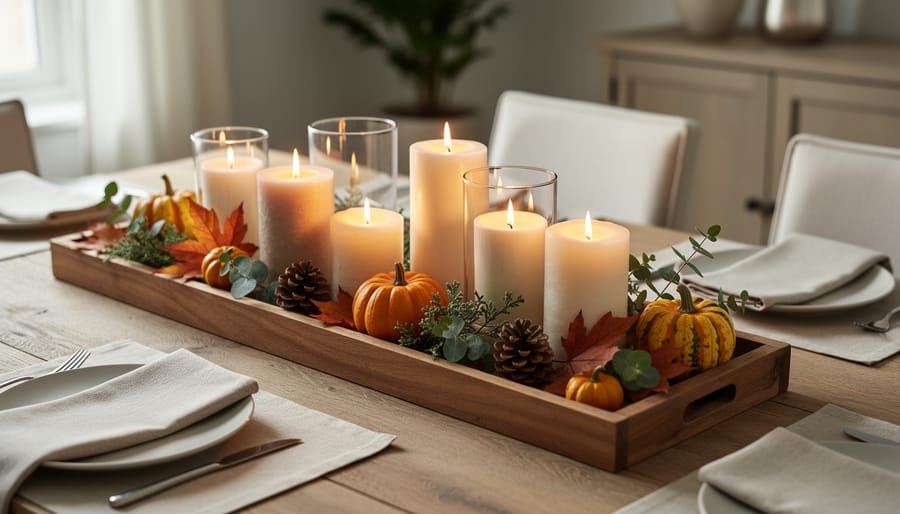
A long, low tray transforms your dining table into a gallery of intention, anchoring centerpieces with architectural purpose rather than leaving arrangements to float aimlessly across linen. This approach moves beyond the predictable single floral centerpiece, creating a curated vignette that evolves with the season, the occasion, and your mood.
The beauty lies in the tray’s ability to unify disparate elements into a cohesive narrative. Arrange tapered candles in staggered heights along the length, intersperse with clusters of seasonal fruit like pomegranates in autumn or citrus in summer, then punctuate with sculptural objects, a vintage brass candlestick, a small ceramic vessel, or smooth river stones. The tray holds these pieces in visual conversation, preventing the scattered look that occurs when items are placed directly on the table. Reclaimed wood trays add rustic warmth and textural contrast against polished tableware, while hand-painted ceramic options introduce artistry and color that complements your china patterns.
Beyond aesthetics, this approach delivers practical luxury. When dinner concludes, simply lift the entire tray to clear the table for dessert or coffee, preserving your carefully composed display intact. The tray protects the table surface from candle wax, condensation rings, and minor spills. Choose a length that leaves ample space for place settings, typically eighteen to thirty-six inches for standard dining tables, and maintain a low profile so guests converse comfortably across the arrangement. This single piece elevates ordinary meals into occasions worth lingering over.
8. The Bathroom Spa Retreat, Serenity in the Details
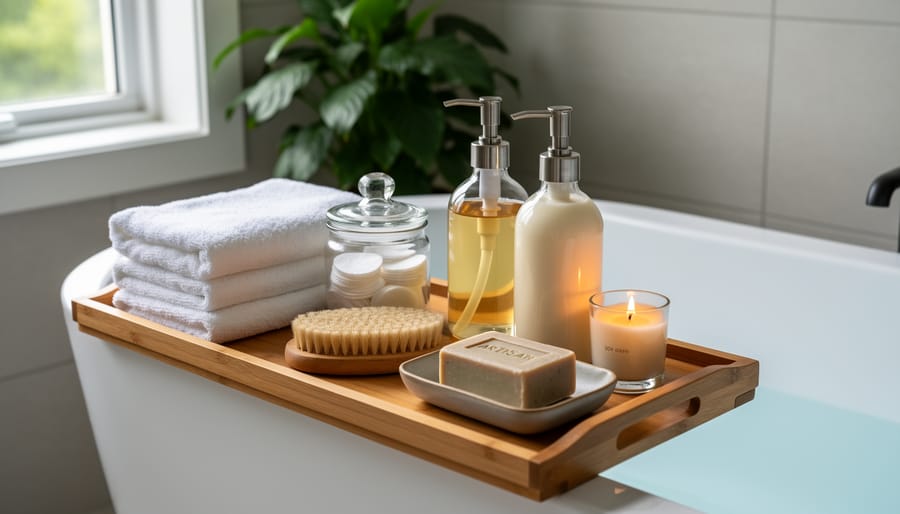
A decorative tray transforms the bathroom into a private sanctuary where daily routines become acts of self-care. Position a water-resistant tray on the ledge of a freestanding tub or atop a marble vanity to gather bath essentials, sea salts in an apothecary jar, neatly rolled hand towels, a flickering candle that casts gentle light across polished surfaces. This simple arrangement elevates the mundane into ritual, creating a visual anchor that whispers relaxation the moment you step through the door.
The key lies in selecting materials that withstand humidity without sacrificing elegance. Teak brings organic warmth and natural water resistance, its honey tones deepening over time into a rich patina. High-quality resin offers contemporary sophistication in translucent hues or marble-look finishes that won’t warp or stain. Powder-coated metal in matte black or brushed nickel delivers industrial chic while repelling moisture with ease.
For compact bathrooms, space-saving styling becomes essential, choose a narrow rectangular tray that maximizes vertical display without crowding counters. Layer a small glass vial of eucalyptus beside folded washcloths and a ceramic soap dish. The tray corrals these elements into a cohesive tableau while protecting surfaces from drips and spills. Whether perched on a wooden bath caddy or nestled between dual sinks, the right tray turns functional storage into a daily reminder that luxury lives in the details.
9. The Kitchen Counter Organizer, Form Meets Daily Function
The kitchen counter deserves the same design consideration as any living space, yet it’s often where visual chaos reigns. A well-chosen decorative tray transforms the area beside your stove or sink into an organized command center that elevates the aesthetic while streamlining your cooking workflow.
Position a rectangular or oval tray to corral your most-reached-for ingredients and tools: premium olive oil bottles, flaked sea salt in a ceramic cellar, your everyday wooden spoons, and perhaps a small vessel for fresh herbs. The tray creates an invisible boundary that prevents the countertop sprawl that accumulates throughout the week. What might otherwise read as clutter, bottles of varying heights, scattered utensils, becomes a composed still life when contained within defined edges.
Material selection matters profoundly in this high-use environment. Stainless steel trays offer industrial elegance and withstand splashes, heat, and the inevitable oil drips without staining. They’re effortless to wipe clean between meal preparations. Glazed stoneware brings warmth and artisanal character while providing equal durability; look for pieces with a raised lip to contain any spills. Powder-coated metal in matte black or navy adds modern sophistication and resists fingerprints.
The practical magic lies in mobility. When you need full counter access for rolling dough or assembling a charcuterie board, the entire arrangement lifts away in one motion. You’ve created a portable pantry station that serves daily function without sacrificing the refined aesthetic that defines a well-appointed kitchen.
10. The Gallery Wall Ledge Tray, A Three-Dimensional Art Moment
Imagine transforming a gallery wall from flat canvas into a living, three-dimensional narrative. A shallow decorative tray mounted on a floating shelf or ledge becomes an unexpected stage for miniature sculptures, vintage compasses, or layered photographs, objects that gain dramatic presence when elevated against a vertical plane. This approach breaks the predictable rhythm of framed art alone, inviting the eye to linger on tactile details and personal treasures that might otherwise disappear on a horizontal surface.
The tray itself functions as both frame and anchor. A gilded brass rectangle highlights the warm patina of bronze figurines, while a matte-black lacquered tray offers stark contrast beneath a collection of white porcelain birds. The shallow lip prevents objects from sliding yet remains discreet enough to let the contents command attention. Consider varying the tray’s placement, some mounted at eye level, others deliberately low to create visual movement as you move through the room.
This idea excels at storytelling. Group items by theme: antique keys and vintage postcards evoke travel, while geometric crystals and art-glass paperweights speak to modern minimalism. The beauty lies in the edit, each object earns its place, creating a curated vignette that evolves as your collection grows. InWood Furniture champions this philosophy of layered narrative, partnering with designers who understand how global seamless shopping brings rare finds into conversation with treasured heirlooms. The tray transforms from functional object to gallery curator, honoring every piece within its borders.
11. The Office Desk Organizer, Sophistication in the Workspace
A streamlined tray on your desk does more than wrangle pens and paperclips, it declares that even your workspace deserves design intention. Position a low-profile rectangle in concrete, blackened steel, or matte ceramic near your keyboard to corral business cards, a fountain pen, and a small succulent or air plant. The boundary it creates carves out a dedicated work zone on a shared surface, anchoring productivity without sacrificing visual calm.
Concrete offers industrial weight and a monochromatic palette that recedes into minimalist schemes, while blackened steel lends architectural edge and pairs beautifully with chrome hardware or leather desk accessories. Matte ceramic in charcoal or dove gray softens the aesthetic, ideal if your home office blends into a living area. Keep the footprint compact, twelve by eight inches is often enough, so the tray frames essentials without crowding monitor stands or notebooks.
The psychology here mirrors shopping for luxury furniture in general: when functional objects are chosen with care, they elevate daily rituals. A well-chosen desk tray transforms the mundane act of signing a contract or answering email into a moment framed by intentional design. Add a single stem in a bud vase or a polished stone paperweight, and you have a micro-vignette that signals professionalism to video-call backgrounds and reminds you that working from home need not mean compromising on aesthetic rigor.
12. The Seasonal Vignette, Rotating Decor with Ease
The beauty of seasonal decorating lies not in wholesale transformation, but in thoughtful evolution, and a well-chosen tray transforms this ritual from overwhelming to effortless. By treating a decorative tray as a portable vignette, you create a cohesive display that can be refreshed entirely in moments, allowing your interiors to breathe with the rhythm of the seasons without disrupting the foundational design of your space.
In autumn and winter, arrange pine cones nestled among pillar candles in mercury glass holders, perhaps accented with dried botanicals or vintage ornaments. The tray becomes a miniature landscape of warmth, easily transported from dining table to console. When spring arrives, swap in fresh tulips in a low ceramic vessel, delicate porcelain birds, and pale linen napkins folded beneath a single sculptural branch. Summer calls for sun-bleached shells, smooth driftwood pieces, and hurricane lanterns with sand pooled at their base, a coastal tableau that evokes seaside weekends without a single permanent fixture.
This approach honors the luxury of restraint. Rather than scattering seasonal elements throughout every room, you concentrate them on a single, beautifully framed surface. The tray itself, whether hammered brass, reclaimed teak, or powder-coated steel, remains constant, its quality material anchoring each changing scene.
InWood Furniture supports this year-round curation through global shipping partnerships that deliver seasonal accents from independent artisans worldwide, while our design consultants offer personalized guidance on sourcing pieces that align with your aesthetic across every season.
Material and Finish Considerations for Luxury Trays
Choosing the right material for your decorative tray elevates it from a functional accessory to a defining element of your interior. Each finish tells a story and sets the tone for the objects it holds.
Walnut and teak bring organic warmth that softens contemporary spaces and enriches traditional settings. The natural grain patterns in walnut, deep chocolate hues with subtle figure, add movement to static surfaces, while teak’s honey tones introduce a relaxed sophistication. Both woods develop a richer patina over time, making them ideal for heirloom-quality pieces from independent artisans in InWood’s collection. A light wax polish maintains their luster without obscuring the wood’s character.
Brass and nickel deliver instant glamour, their reflective surfaces amplifying ambient light across vanities, bar carts, and entryway consoles. Unlacquered brass develops a lived-in patina that appeals to lovers of vintage charm, while polished nickel retains its mirror-bright finish with minimal upkeep. These metals anchor Art Deco schemes and add tension to minimalist interiors. Wipe with a soft cloth to preserve the shine.
Acrylic and resin offer a modern edge, their transparency creating visual lightness on crowded surfaces. Clear acrylic trays float above coffee tables without visual weight, perfect for showcasing sculptural bases or layered textiles beneath. Colored resin, jade, amber, obsidian, introduces saturated hues that punctuate neutral palettes. Both materials resist moisture and scratches, thriving in high-traffic kitchens and bathrooms. A damp microfiber cloth handles daily cleaning.
Marble and mirror embody timeless elegance. Carrara marble’s cool veining brings classical gravitas to dining tables and powder rooms, while mirrored trays multiply candlelight and create depth on narrow ledges. Consider the material’s practical advantages alongside its aesthetic power:
- Walnut and teak: warmth, tactile appeal, durability in dry environments, complements mid-century modern and traditional styles
- Brass and nickel: reflectivity, patina development, pairs with Art Deco and transitional interiors
- Acrylic and resin: visual lightness, moisture resistance, enhances contemporary and eclectic spaces
- Marble and mirror: luminosity, classical elegance, elevates formal and glam aesthetics
Renowned designers in InWood’s portfolio often combine materials, a walnut frame with a brass inlay, a marble base beneath mirrored edges, to layer texture and dimension. InWood’s personalized service team can guide you toward finishes that honor your home’s existing palette while introducing unexpected contrast.
Styling Principles: Scale, Balance, and Personalization
Selecting the right tray begins with proportion. A coffee table demands a piece that covers roughly one-third to one-half of the surface area, creating visual anchor without overwhelming the table’s architecture. Console tables and vanities favor narrower silhouettes that leave breathing room on either side, while ottomans require firm, flat trays sized just slightly smaller than the upholstered top. When in doubt, measure twice and consider how the tray interacts with surrounding furniture lines.
The rule of threes remains a designer’s secret weapon for arrangement. Group objects in odd numbers, varying their heights and textures to create dynamic visual triangles. A tall sculptural vase beside a stack of art books and a low ceramic dish establishes rhythm and movement, drawing the eye across the composition rather than stopping at a single focal point. Balance doesn’t mean symmetry; it means thoughtful distribution of visual weight.
Negative space holds as much power as the objects themselves. Resist the temptation to fill every inch. A generously empty section of tray surface allows each curated piece to breathe and be appreciated individually. This restraint signals sophistication and prevents the vignette from reading as clutter.
Personalization transforms a tray from decorative accessory into autobiographical statement. Display a cherished heirloom alongside contemporary ceramics, or arrange souvenirs from travels beside handcrafted local finds. InWood’s customer service team specializes in this exact alchemy, guiding clients through material selections, scale considerations, and styling nuances that honor individual aesthetic voices while achieving professional polish.
Frequently Asked Questions About Decorative Trays
What size tray should I use on a coffee table?
Choose a tray that covers roughly one-third to one-half of the table’s surface, leaving breathing room around the edges. For a standard 48-inch coffee table, a tray measuring 20 to 24 inches works beautifully without overwhelming the proportions.
Can decorative trays work in minimalist interiors?
Absolutely. In fact, they’re essential for minimalism, a sleek walnut or matte ceramic tray creates visual order and defines space without adding clutter. The key is selecting pieces with clean lines and restraint in what you display.
How do I clean luxury tray finishes like brass or marble?
For brass, use a soft cloth with mild soap and water, then dry immediately to prevent tarnish. Marble requires pH-neutral cleaners and quick spill removal to avoid staining, while lacquered finishes need only a damp microfiber cloth.
What’s the difference between a decorative tray and a serving tray?
Decorative trays prioritize aesthetics and surface styling, often featuring mirrors, gilding, or sculptural edges that make them permanent fixtures in a room. Serving trays emphasize functionality with deeper wells and handles, designed for carrying, though many luxury pieces beautifully blur this distinction.
Can I use the same tray in multiple rooms?
Versatility is one of a quality tray’s greatest strengths. A neutral material like leather or brushed nickel transitions seamlessly from entryway console to bedroom nightstand to bar cart, letting you refresh styling without reinvesting in new pieces.
These questions address the practical concerns that arise when investing in decorative trays for a luxury interior. Understanding the relationship between scale and surface ensures each piece enhances rather than dominates its setting. Recognizing that a well-chosen tray can migrate through your home multiplies its value, turning a single acquisition into a versatile design tool that adapts to changing needs and seasonal vignettes.
These twelve ideas reveal a fundamental truth about luxury living: transformation doesn’t require dramatic renovation. A carefully selected tray redefines how we interact with our spaces, whether anchoring a morning coffee ritual on an ottoman or staging a spa-like escape in the bathroom. Each application demonstrates how a single accessory elevates the everyday into something extraordinary, curating visual stories that reflect individual taste and lifestyle.
At InWood Furniture, we understand that exceptional interiors emerge from the thoughtful layering of exclusive pieces. Our partnerships with renowned designers and independent artisans ensure every tray in our collection offers heirloom quality and distinctive character. From hand-forged brass to sustainably sourced walnut, each material is chosen for its ability to anchor a room’s narrative while serving genuine function.
We invite you to explore our curated tray collection and discover how these versatile pieces can personalize your home. Our professional customer service team is ready to guide your selection, ensuring the perfect scale, finish, and style for your space. With seamless global shipping, creating a home that tells your unique story begins today, one beautifully considered surface at a time.