
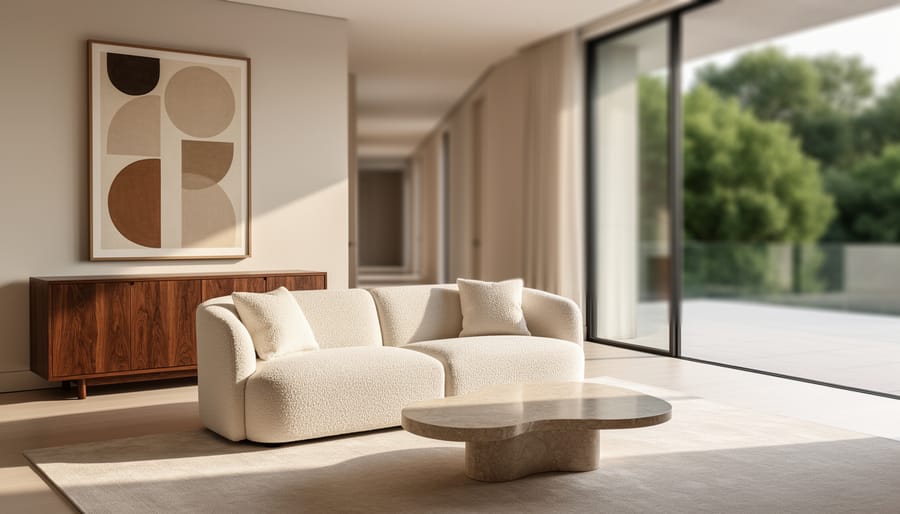
Contemporary luxury interior design is a refined aesthetic approach that blends minimalist architectural sensibility with premium materials, curated furnishings, and an emphasis on spatial flow and natural light. Unlike traditional luxury styles that lean on ornate detail and historical references, or purely contemporary designs that can feel stark, this hybrid celebrates restraint, quality, and personal expression in equal measure.
The distinction matters because how we define luxury has shifted. In 2026, true opulence reveals itself not through excess but through intentionality. A contemporary luxury space whispers rather than shouts. It prioritizes exceptional craftsmanship over decoration, thoughtful curation over abundance, and livability over showmanship. The result is an environment that feels both aspirational and deeply personal, where every element serves a purpose and nothing competes for attention.
This style has become the preferred language of discerning homeowners who understand that genuine luxury lives in the details: the hand-finished walnut credenza that anchors a living room, the seamless transition between indoor and outdoor spaces, the perfect balance of texture and tone that makes a room feel complete without feeling crowded. It speaks to those who value the story behind a piece as much as its visual impact, who appreciate the difference between a mass-produced sectional and one designed in collaboration with an internationally recognized atelier.
What follows is a practical exploration of how contemporary luxury interior design actually works. We’ll unpack the core principles that define the style, examine the essential components that bring it to life, and explore how these elements translate into spaces that feel both elevated and effortlessly inviting. Whether you’re reimagining a single room or an entire residence, understanding this approach will clarify where to invest, what to edit, and how to create interiors that transcend trends.
What Contemporary Luxury Interior Means Today
Contemporary luxury interior design represents a fundamental shift in how we understand and experience high-end living spaces. At its core, this aesthetic philosophy champions authenticity over ostentation, celebrating quality craftsmanship and personal expression rather than simply displaying wealth. It’s the difference between a room filled with expensive things and a space where every element carries meaning, purpose, and genuine beauty.
Unlike traditional luxury, with its crystal chandeliers, heavy draperies, and ornate gilding, contemporary luxury embraces restraint without sacrificing richness. It also diverges from stark minimalism, which can feel cold and impersonal. Instead, this approach finds the sweet spot between the two: spaces that breathe and flow, furnished with pieces that command attention through design integrity rather than visual noise. Think clean architectural lines softened by sumptuous textiles, statement furniture that functions as sculpture, and carefully considered color palettes that create warmth without clutter.
The philosophy rests on several interconnected principles:
- Curated Maximalism
- The intentional selection of exceptional pieces that create visual interest and personality without overwhelming the space. Each item earns its place through design merit and personal significance.
- Investment Pieces
- Furniture and décor chosen for enduring quality, timeless design, and craftsmanship that improves with age rather than following fleeting trends.
- Artisanal Craftsmanship
- The elevation of human skill and technique, where handmade details and masterful construction become defining characteristics rather than hidden features.
- Spatial Harmony
- The thoughtful balance of proportion, flow, and negative space that allows each design element to be fully appreciated. Rooms feel generous without excess.
- Personalized Luxury
- The expression of individual taste and lifestyle through design choices that reflect the homeowner’s values, experiences, and aesthetic sensibilities rather than a decorator’s formula.
What makes contemporary luxury particularly relevant today is the growing sophistication of homeowners who seek substance behind the style. There’s been a decisive move away from status-symbol purchasing toward collecting pieces with genuine provenance. Renowned designers and independent makers have become central to this shift, offering furniture and lighting that carries their creative signature while serving real human needs. These aren’t anonymous factory productions but considered works that emerge from specific design visions.
This approach also acknowledges that luxury should enhance daily life, not exist separately from it. A contemporary luxury interior functions beautifully for real living, comfortable seating that happens to be exquisitely crafted, dining tables built to last generations while hosting countless gatherings, storage solutions that are as visually striking as they are practical. It’s luxury you can live with, touch, use, and love rather than merely admire from a distance.
How Contemporary Luxury Interior Design Works
The Art of Curation
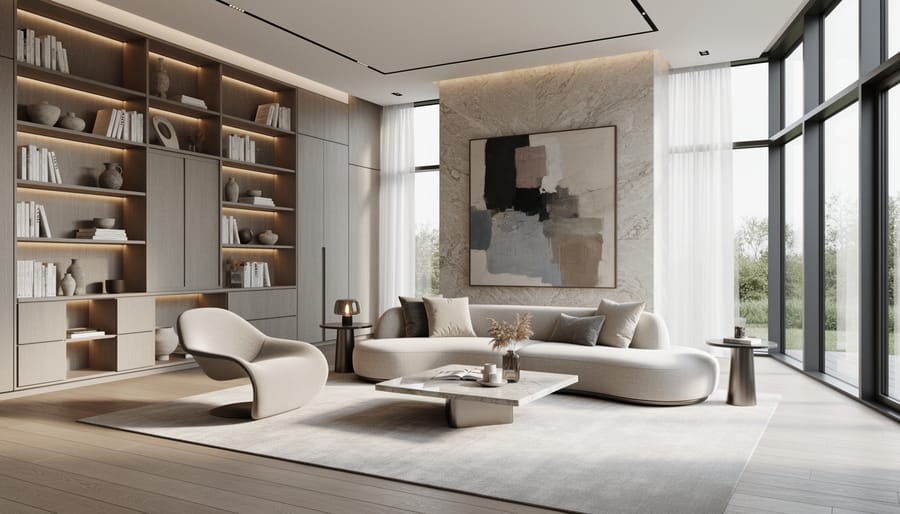
In contemporary luxury interior design, less becomes more only when what remains carries profound meaning. Rather than accumulating furniture to occupy every corner, curation demands restraint, a willingness to leave space breathing while each selected piece commands attention on its own merit. This intentional sparseness allows individual elements to reveal their full character, from the grain patterns in a walnut credenza to the sculptural lines of a statement armchair.
Provenance matters deeply in this context. Knowing a piece emerged from a specific designer’s studio, understanding the inspiration behind its form, or recognizing the craftsmanship lineage it represents transforms furniture from commodity to cultural artifact. When homeowners can trace a console table back to its creator’s philosophy or connect a lighting fixture to a larger body of artistic work, they’re not simply decorating, they’re participating in a design narrative that extends beyond their walls.
This is where strategic luxury brand partnerships prove essential. Curators who maintain direct relationships with renowned designers and exclusive manufacturers offer access to pieces with documented origins and authentic stories. These connections ensure authenticity while opening doors to limited editions and custom possibilities that mass retail channels can’t provide. Each acquisition becomes a considered decision rather than an impulse, building a collection unified by quality and personal resonance rather than fleeting trends.
Material and Texture Layering
The mastery of contemporary luxury interior design reveals itself most powerfully in how materials converse with one another. Rather than relying on a single statement finish, this approach builds visual and tactile richness by pairing contrasting textures that create an experience of depth without visual clutter.
Natural materials form the foundation. A live-edge walnut dining table might sit atop polished concrete floors, while hand-carved marble rests against matte-finished wood cabinetry. These organic elements bring warmth and authenticity, grounding spaces in something real and enduring. The grain patterns, natural variations, and inherent imperfections become design features rather than flaws to conceal.
Metals enter the composition as punctuation marks of refinement. Brushed brass hardware catches light differently than the polished chrome of a fixture, while aged bronze accents add gravitas without the flash of high-shine finishes. Contemporary luxury favors these warm, living metals over the stark coldness of reflective surfaces, allowing patina and character to develop over time.
Textiles soften the architectural elements. A bouclé sofa paired with silk velvet cushions creates a conversation between structure and fluidity. Linen drapery filters natural light while maintaining privacy, its subtle texture visible when illumination shifts throughout the day. The layering extends to area rugs that define zones within open spaces, perhaps hand-knotted wool grounding a seating area while sisal adds organic texture beneath a console.
The discipline lies in restraint. Each material serves a specific purpose in the composition, contributing its unique voice without competing for attention. This thoughtful restraint transforms a collection of beautiful elements into a cohesive, sophisticated interior that reveals new details with every encounter.
Essential Elements That Define the Style
Furniture as Sculpture
In contemporary luxury interiors, furniture isn’t merely placed to fill a room, it’s selected to define it. Each piece functions as a three-dimensional artwork that commands attention while serving its purpose with understated grace. A sculptural dining table with an organic live-edge top becomes the room’s gravitational center, its natural grain patterns and flowing form creating visual drama that no painting could match. An armchair with architectural lines and unexpected material combinations transforms a reading corner into a gallery-worthy vignette.
This elevation of furniture to art form stems directly from the vision of independent designers and established masters who approach each creation as both functional object and personal expression. These makers bring distinctive perspectives that mass production cannot replicate, a console table that references mid-century geometry while incorporating hand-forged bronze details, or a bed frame where the headboard’s sculptural presence rivals installation art. The result is furniture with provenance and character, pieces that spark conversation and reveal new details with each viewing.
Consider how a suspended marble credenza appears to float against the wall, its cantilevered design defying expectations of weight and support. Or a modular seating system that reconfigures like kinetic sculpture, each element precisely balanced in proportion and finish. These aren’t furnishings that fade into the background, they’re the reason you enter the room.
The Refined Color Story
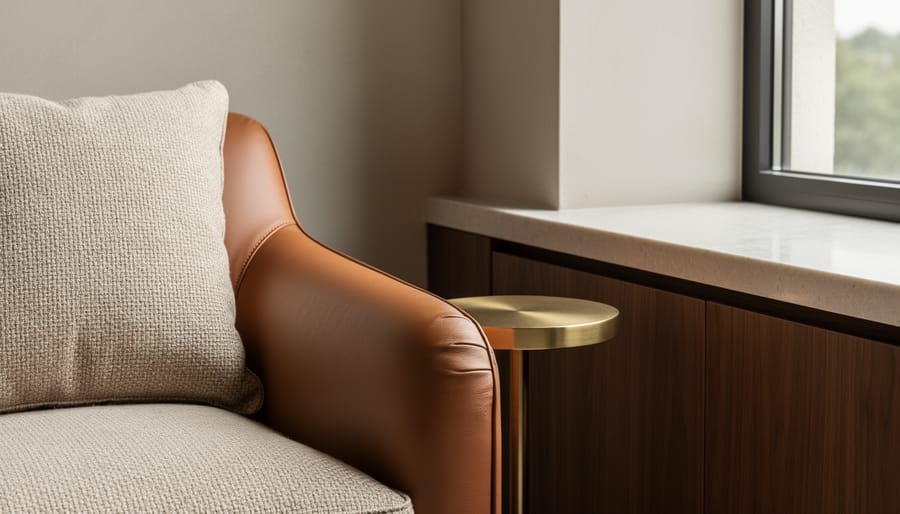
Contemporary luxury interiors speak through color in whispers rather than shouts. The palette centers on earthy neutrals, warm taupes, soft grays with greige undertones, creamy ivories that shift with natural light throughout the day. These foundations create visual calm and allow the architecture and furniture to command attention without competing for it.
Architectural blacks enter as deliberate punctuation. A powder-coated steel table base. Window frames that define views like gallery pieces. These deep, matte tones provide visual weight and structure, preventing neutral spaces from drifting into blandness. They anchor the eye and create contrast that feels intentional rather than stark.
Warm metallics layer in next, brushed brass hardware, antiqued bronze accents, champagne-finished lighting fixtures. These aren’t the high-shine golds of traditional luxury but quieter, living finishes that develop character over time. They catch light without demanding it, adding dimensional warmth that complements natural wood tones and soft textiles.
The most sophisticated contemporary luxury spaces save jewel tones for strategic moments. A single emerald velvet chair. Sapphire cushions in a curated grouping. These saturated accents create visual interest and personality without fragmenting the cohesive whole. The restraint is essential, two or three considered accent moments across an entire room rather than a rainbow of competing hues.
This approach creates spaces that feel both serene and engaging, sophisticated without being austere. The palette never screams for attention but rewards those who notice its layered complexity.
Lighting as Architecture
In contemporary luxury interiors, lighting transcends its functional origins to become architecture itself. Rather than treating fixtures as mere utilities, this approach recognizes that light shapes how we perceive space, influences our emotional response to a room, and can transform even the most beautifully appointed interior into something transcendent.
Statement pieces anchor this philosophy. A sculptural chandelier suspended above a dining table isn’t simply providing illumination, it’s defining the room’s vertical dimension, creating a focal point that draws the eye upward and establishes scale. These fixtures, often crafted by lighting designers whose names carry weight in the design world, function as functional sculpture. Materials matter enormously: hand-blown glass that catches and refracts light, blackened metals that create dramatic silhouettes, or organic forms that soften architectural rigidity.
Yet contemporary luxury lighting extends far beyond showpiece fixtures. Integrated systems create layers of ambient, task, and accent illumination that shift throughout the day. Recessed lighting washes walls with subtle gradients, while discreet uplighting reveals architectural details. Linear LED strips disappear into ceiling coves and behind millwork, defining planes and boundaries without visible hardware.
This orchestrated interplay allows homeowners to modulate atmosphere, bright and energizing for morning coffee, warmly intimate for evening conversation. The result feels less like a room that’s lit and more like space that breathes with intentional luminosity, where light itself becomes another carefully considered material in the designer’s palette.
Where Contemporary Luxury Interior Design Thrives
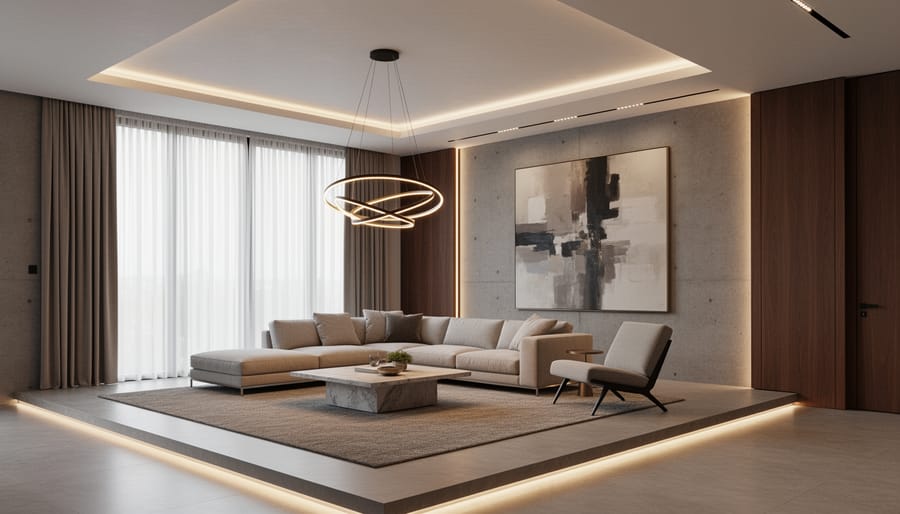
Contemporary luxury interior design transforms any space where people gather, rest, and live, but it reaches its fullest expression in rooms that balance intimacy with architectural presence. The most successful applications share a common thread: they’re spaces where quality of life matters more than fleeting trends, and where the emotional resonance of design becomes part of daily experience.
This design philosophy excels in:
- Open-concept living spaces where furniture defines zones without walls, creating flow while maintaining distinct character
- Primary bedroom sanctuaries that wrap inhabitants in textures and light, establishing retreats from the world
- Entertaining areas, dining rooms and lounge spaces, where statement pieces anchor conversation and create memorable experiences
- Home offices with gravitas, where sculptural desks and considered lighting elevate work into a refined pursuit
- Integrated outdoor-indoor zones that extend the luxury aesthetic seamlessly into gardens, terraces, and verandas
The living room remains the quintessential canvas. Here, a museum-quality sofa anchors the space, flanked by accent chairs that demonstrate material mastery, perhaps hand-stitched leather paired with linen-wrapped cushions. Each piece stands confidently in conversation with the others, never competing, always complementing. The primary suite follows close behind, where contemporary luxury sheds formality for sensory richness: textured headboards, layered bedding in tonal palettes, and nightstands that function as objets d’art.
What makes 2026 particularly transformative is how geography no longer constrains access to this aesthetic. A homeowner in Singapore can curate a collection alongside someone in São Paulo, both discovering the same Italian craftsmanship or Danish design through platforms dedicated to global seamless shopping. This democratization hasn’t diluted the exclusivity, if anything, it’s raised the bar. Clients now compare the best from multiple continents, selecting pieces that speak to their specific vision rather than settling for what’s regionally available.
Dining areas offer another powerful application, where a sculptural table becomes the gathering point for life’s meaningful moments. Contemporary luxury here means investing in a piece that will anchor decades of dinners, paired with chairs comfortable enough for lingering conversations yet refined enough to impress.
Creating Your Contemporary Luxury Space
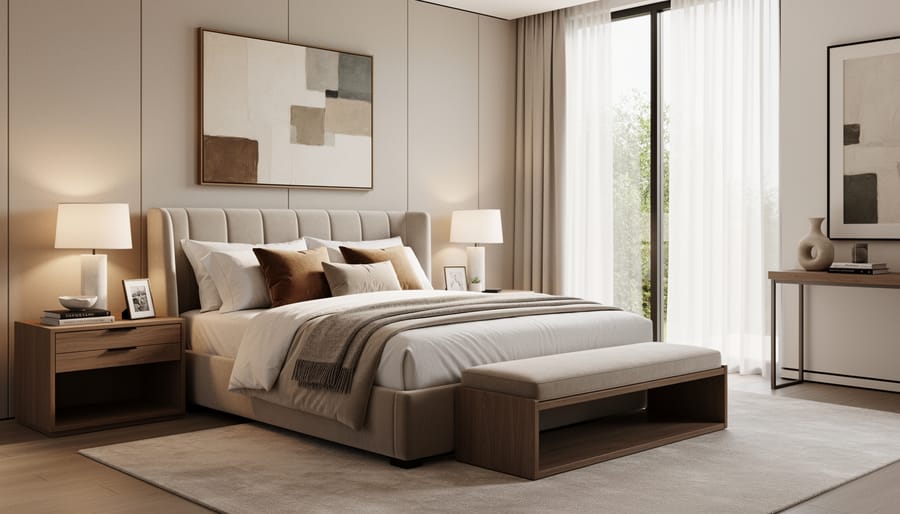
Building a contemporary luxury interior begins with a single, transformative piece, not a room full of furniture ordered in haste. The most successful spaces emerge from patient curation, where each addition strengthens the visual narrative rather than simply filling empty corners. Start with an anchor: a sculptural sofa from a renowned designer, a dining table that commands attention through materiality and form, or a lighting fixture that redefines the spatial boundaries of your room. This foundational piece sets the tone and quality benchmark for everything that follows.
Quality reveals itself over time. The hand-finished walnut credenza develops a lustrous patina that particle board never achieves. The precisely tailored upholstery maintains its shape and comfort through years of daily use while lesser pieces sag and fade. When shopping for luxury furniture prioritize provenance and craftsmanship over immediate gratification. A well-curated home takes months, sometimes years, to complete, and that deliberate pace produces spaces with genuine personality rather than showroom uniformity.
Work with specialists who understand the nuances of contemporary luxury. Curated sources maintain relationships with independent designers and established houses, providing access to pieces you won’t discover through conventional retail channels. They can guide proportions, suggest unexpected material pairings, and help you avoid costly mistakes that compromise your vision. This expertise proves invaluable when balancing investment pieces with supporting elements, ensuring your budget achieves maximum impact.
Personalization transforms good design into exceptional living. Commission custom dimensions for that perfect sectional. Select the precise leather grade and color that resonates with your aesthetic. Layer in objects with personal meaning, inherited art, travel finds, cherished books, that ground the sophistication in genuine warmth. Contemporary luxury accommodates these individual touches because the foundational design philosophy embraces humanity rather than dictating sterile perfection.
Build your collection strategically. Invest heavily in pieces you’ll interact with daily: seating, beds, dining tables. These anchor investments justify their cost through years of tactile pleasure and visual satisfaction. Complement them with carefully selected accent pieces that introduce texture, color, and sculptural interest. The result isn’t just a beautifully designed room, it’s a space that genuinely reflects how you live and what you value.
Common Questions About Contemporary Luxury Interiors
Homeowners and design enthusiasts approaching contemporary luxury for the first time often share similar concerns about accessibility, investment, and execution. These questions reflect the thoughtful consideration this aesthetic demands.
How does contemporary luxury differ from minimalism?
While minimalism focuses on reduction and emptiness, contemporary luxury emphasizes refinement and intentionality, each piece earns its place through quality and meaning rather than simply filling space. The aesthetic welcomes texture, warmth, and personality that pure minimalism often avoids.
Can contemporary luxury work in smaller spaces?
Absolutely. The philosophy of investing in fewer, better pieces actually serves compact spaces beautifully, allowing each element room to breathe while maximizing both function and visual impact. Scale-appropriate furniture and thoughtful spatial flow matter more than square footage.
What should I expect to invest in quality pieces?
Authentic designer furniture from established names typically starts around several thousand dollars for accent pieces, with substantial items like sofas or dining tables ranging higher based on materials, craftsmanship, and designer provenance. The key is viewing these as long-term investments that appreciate through daily use rather than disposable purchases.
How do I source authentic designer pieces globally?
Working with specialized curators who maintain direct relationships with designers and manufacturers ensures authenticity while navigating international sourcing, shipping logistics, and quality verification. Established online luxury furniture sources provide access to global design talent with the expertise to guide selections and coordinate delivery.
Beyond these foundational questions, clients often wonder whether contemporary luxury remains timeless or falls victim to trends. The answer lies in the philosophy itself, by choosing pieces for their inherent design integrity rather than fleeting fashion, this aesthetic naturally transcends temporary movements. A beautifully crafted chair from a respected designer holds its appeal across decades because the craftsmanship and form address fundamental human needs for beauty and comfort.
The maintenance question deserves honest attention. Natural materials like solid wood, quality leather, and stone do require care, but this relationship between owner and object becomes part of the luxury experience. Regular dusting, occasional conditioning of leather, and proper cleaning of textiles preserve investment pieces far more easily than replacing mass-produced alternatives every few years. Many homeowners discover that caring for beautiful objects brings unexpected satisfaction.
Another common concern centers on creating cohesion when building a collection over time. Contemporary luxury actually accommodates gradual curation better than matchy-matchy approaches. Begin with one anchor piece that speaks to your aesthetic vision, perhaps an exceptional sofa or dining table, then build around its material palette and design language. Mixing designers and eras works beautifully when unified by quality, scale, and a consistent color story.
For those hesitant about committing to bold pieces, starting with transformative accents like statement mirrors or sculptural lighting allows you to test the aesthetic’s impact before investing in major furniture. These pieces introduce the refined drama contemporary luxury offers while remaining flexible as your collection evolves. The confidence gained from seeing how one exceptional piece elevates a space often inspires the next thoughtful addition.
Contemporary luxury interior design isn’t a checklist you complete. It’s an evolving relationship with the spaces you inhabit, a reflection of your experiences, values, and aesthetic intuition. The homes that resonate most deeply are those built piece by intentional piece, where each element carries meaning beyond its function. This approach demands patience and discernment, but the result is a space that feels unmistakably yours rather than pulled from a catalog or trend forecast.
At InWood Furniture, we’ve built our foundation on this understanding. We know that creating extraordinary interiors requires access to exceptional pieces, yes, but also guidance, context, and trust. Our relationships with independent designers and established names give our clients worldwide the opportunity to source furniture that embodies genuine craftsmanship and vision. Whether you’re in Singapore, London, or São Paulo, the curation process remains personal, supported by expertise that helps translate your aspirations into tangible choices.
The beauty of contemporary luxury lies in its capacity to adapt to who you are and who you’re becoming. Your home should inspire you when you walk through the door at the end of a demanding day, provide the backdrop for meaningful conversations, and quietly affirm your commitment to quality in all its forms. That’s the promise of spaces designed with intention, where luxury isn’t about impressing others but about enriching your own daily experience with beauty, comfort, and enduring substance.