
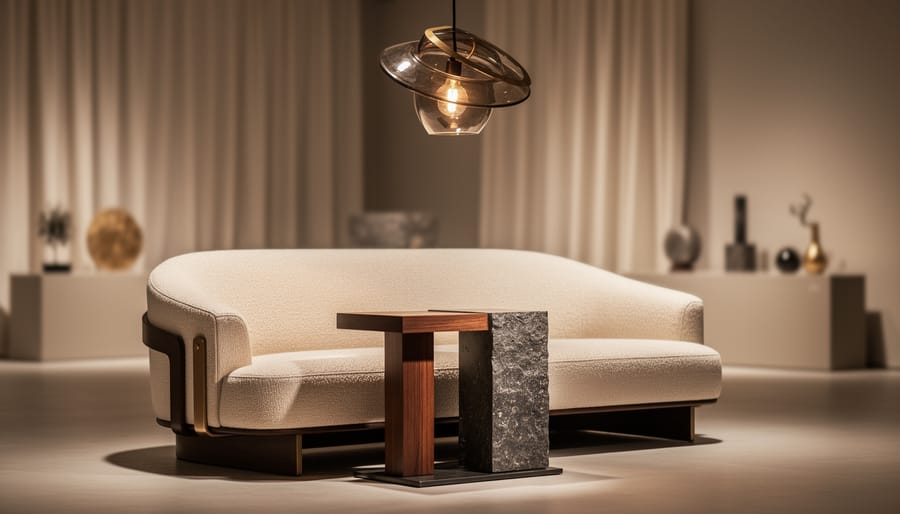
Luxury brand partnerships represent the convergence of exceptional craftsmanship, where two or more prestigious houses unite their distinct design philosophies to create pieces that transcend what either could achieve alone. These collaborations deliver furniture and décor that combine the technical mastery of one atelier with the aesthetic vision of another, resulting in limited-edition collections that become instant heirlooms. For discerning homeowners and design professionals, understanding these partnerships unlocks access to some of the most covetable pieces in contemporary interiors.
When Hermès joins forces with a century-old Italian furniture maker, or when a Scandinavian textile house collaborates with a Japanese ceramicist, the result goes far beyond branding exercises. These alliances fuse complementary expertise: perhaps one partner brings generational knowledge of hand-tied upholstery while the other contributes avant-garde surface treatments or proprietary materials developed over decades. The outcome is furniture that tells a richer story than single-brand offerings, pieces that bear the DNA of multiple creative legacies.
The appeal lies partly in exclusivity. Partnership collections typically see limited production runs, sometimes numbered editions that appreciate in value over time. But the deeper draw is the unexpected synergy these collaborations produce. A lighting designer known for minimalist forms might partner with a glassworks celebrated for baroque technique, creating fixtures that balance restraint with opulence in ways neither house would explore independently.
For those investing in such pieces, the value proposition extends beyond scarcity. You’re acquiring objects born from creative friction, where contrasting philosophies force innovation. The best partnerships challenge both brands to venture beyond their comfort zones, yielding designs that feel simultaneously familiar and entirely new.
The Alchemy of Luxury Brand Partnerships
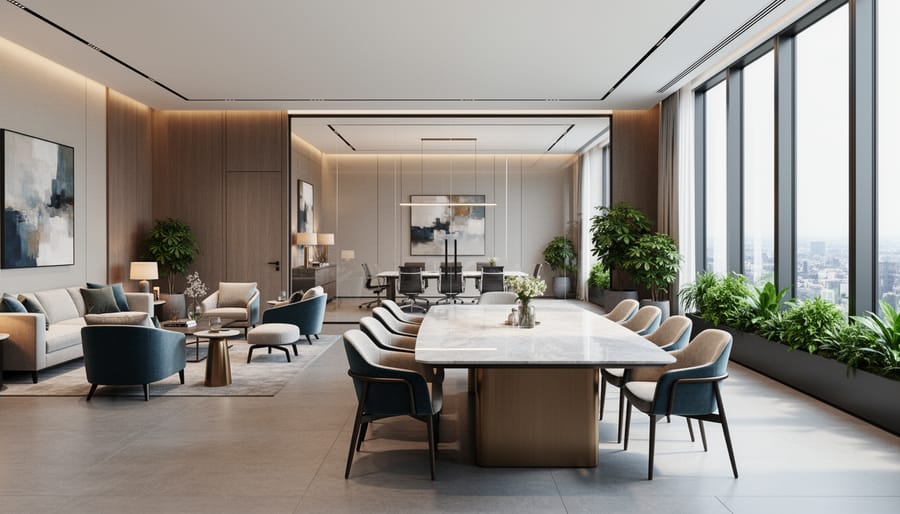
The true alchemy of luxury brand partnerships lies not in mere co-branding exercises, but in the creation of something that neither brand could achieve alone. When heritage meets vision, when craftsmanship intersects with innovation, the resulting pieces carry a narrative depth that elevates them beyond furniture into the realm of cultural artifacts. These collaborations work because they represent a genuine meeting of creative philosophies, where each partner brings irreplaceable expertise to the table.
The evolution from transactional vendor relationships to strategic creative partnerships marks one of the most significant shifts in the luxury interior landscape over the past two decades. Where once a furniture maker might simply license a designer’s name, today’s most compelling partnerships involve deep creative collaboration from concept through execution. The designer doesn’t just sketch a silhouette; they work alongside master craftsmen, exploring materials, testing proportions, and refining details through countless iterations until the piece achieves that elusive quality of inevitability, where every element feels both surprising and exactly right.
The most powerful partnerships emerge when two brands share a commitment to pushing boundaries while honoring tradition, creating pieces that feel both utterly contemporary and destined to become heirlooms.
What defines success in these collaborations is the mutual value exchange that benefits both partners and ultimately serves the client. The established luxury brand gains fresh creative energy and access to new aesthetic territories, while the designer or partner brand receives manufacturing excellence, heritage credibility, and global distribution. But the real magic happens in the synthesis, when a century-old atelier’s techniques meet a visionary designer’s radical approach to form, or when a fashion house’s fabric innovation transforms how we think about upholstery.
These partnerships create experiences that transcend individual products by offering clients something genuinely rare: pieces with authentic provenance and layered meaning. A sofa becomes not just seating but a conversation between two creative forces, each element telling part of a larger story. The grain of the wood speaks to sustainable forestry partnerships, the upholstery textile references a fashion archive, the silhouette nods to mid-century modernism while the joinery technique preserves artisan traditions. This depth of narrative transforms how we inhabit spaces, surrounding ourselves with objects that reward closer attention and deepen appreciation over time.
When Heritage Meets Innovation: Types of Luxury Interior Brand Collaborations
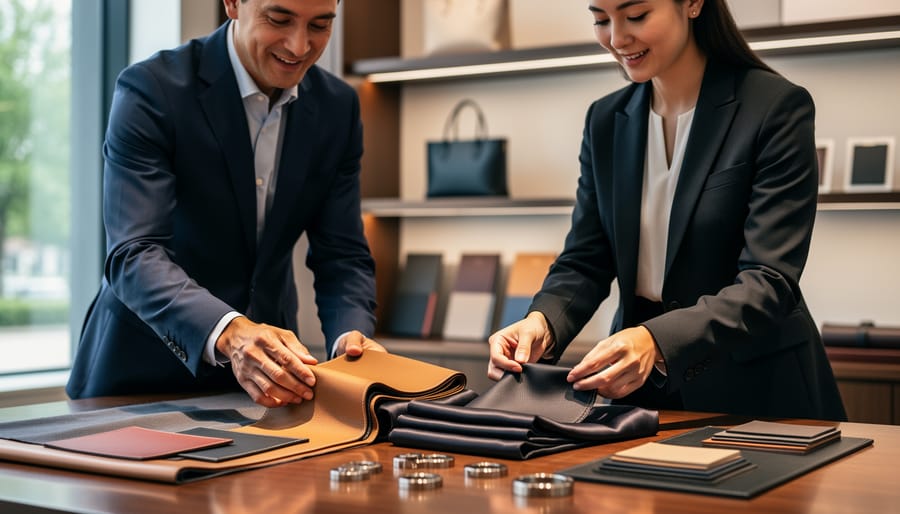
Exclusive Designer Collections
When Cassina invited Philippe Starck to reimagine their archival forms, the result wasn’t simply a designer’s signature on a classic silhouette. It was a conversation between the storied Italian manufacturer’s century of woodworking mastery and Starck’s provocative minimalism, a partnership that honored heritage while pushing toward tomorrow’s aesthetic language. These exclusive designer collections represent luxury brand partnerships at their most compelling: strategic alliances where a furniture house’s technical prowess meets a singular creative vision, yielding pieces that neither party could achieve alone.
The mechanics of these collaborations reveal their depth. An established brand opens its workshops, material archives, and specialized craftspeople to the designer, resources that independent creators rarely access. In exchange, the designer brings conceptual daring and cultural currency that refreshes the brand’s narrative for contemporary collectors. Patricia Urquiola’s multiyear partnership with Moroso demonstrates this exchange beautifully: her experimental approach to textile structure challenged the manufacturer’s upholstery team to develop entirely new techniques, while Moroso’s production expertise transformed Urquiola’s sketches into commercially viable yet uncompromisingly artistic seating.
What distinguishes these partnerships from simple commissioned work is continuity and creative freedom. Rather than one-off projects, the most successful designer collections unfold across seasons, allowing relationships to deepen and vocabularies to evolve. The designer gains intimate knowledge of what the brand does exceptionally well, those proprietary skills and signature materials, and learns to design with those strengths rather than against them. The brand, meanwhile, absorbs new methodologies and expands its capability. The outcome is furniture that carries dual provenance: instantly recognizable as both the designer’s work and the manufacturer’s craft, creating collector appeal that endures beyond trend cycles.
Cross-Industry Collaborations
When Hermès lends its signature leather craftsmanship to a limited-edition sofa collection, or Bentley translates its automotive luxury into home furnishings, something extraordinary emerges, design narratives that couldn’t exist within a single brand’s universe. These cross-industry collaborations represent the most audacious form of luxury partnerships, where seemingly disparate worlds converge to create pieces that challenge our expectations of what belongs in a living room.
Fashion houses bring their textile mastery and seasonal color intelligence to furniture design, resulting in upholstered pieces that capture runway sophistication in three-dimensional form. Automotive brands contribute their understanding of ergonomic precision and engineering excellence, transforming chairs and loungers into studies in comfort technology wrapped in sculptural beauty. Hospitality groups, having perfected the art of creating memorable environments from hospitality interior concepts to grand hotel lobbies, partner with residential furniture makers to bring that same sense of curated luxury into private homes.
The magic lies in the unexpected exchange of expertise. A fashion brand’s understanding of drape and movement informs how fabric flows over a sofa’s curves. An automotive designer’s obsession with seamless surfaces translates into furniture joinery that appears almost impossible. These partnerships don’t simply badge established products with prestigious names, they create entirely new design languages that expand what luxury interiors can express.
Artisan and Craftsman Partnerships
The most resonant luxury brand partnerships often emerge when established houses reconnect with disappearing craft traditions. Rather than rushing production offshore, discerning brands seek out third-generation weavers in Scottish mills, marquetry specialists in French ateliers, or hand-turners preserving centuries-old woodworking techniques in Italian mountain villages. These collaborations honor the time-intensive processes that mass production has rendered economically unviable, mortise-and-tenon joinery that requires days rather than hours, hand-applied lacquer built up in thirty translucent layers, or silk upholstery woven on looms that predate industrialization.
What distinguishes these artisan partnerships from simple supplier relationships is the design dialogue itself. The craftsman’s deep material knowledge, understanding how burled walnut behaves under steam-bending, or which natural dyes achieve particular depth on linen, actively shapes the final piece. The luxury brand contributes global reach, marketing sophistication, and design context that allows traditional techniques to find contemporary expression. The result carries unmistakable authenticity: furniture and textiles with visible maker’s marks, slight variations that prove human hands shaped every element, and provenance stories that transform objects into heirlooms with documented lineage.
The Client Experience: Why These Partnerships Matter to Luxury Homeowners
For luxury homeowners, partnership pieces represent far more than beautiful furniture. They’re gateways to worlds you couldn’t access otherwise, the convergence of two creative visions that produces something neither brand could achieve alone. When Hermès collaborates with a furniture atelier or Bentley lends its design language to a seating collection, you’re not simply purchasing an object. You’re acquiring a narrative, a provenance that transforms your space into a curated story of taste and discernment.
The exclusivity factor extends beyond limited production runs. These collaborations often grant access to design innovation years before it reaches the broader market. You might experience a material breakthrough developed jointly by a textile house and furniture maker, or witness a finishing technique that required months of experimentation between partners. This early access to design evolution positions your interiors at the vanguard rather than following trends.
Investment quality takes on new dimensions with partnership pieces. While a standalone luxury item holds value, collaborative works benefit from dual brand equity and the scarcity premium that defined moments of creative intersection command. The 2019 collaboration between a storied Italian furniture house and a Japanese minimalist designer now trades at multiples of its original price, not as speculation, but because it captured a singular moment in design history that cannot be replicated.
Perhaps most compelling is how these partnerships enable truly personalized environments. The cross-pollination of design philosophies creates pieces with broader stylistic range than single-brand collections offer. A fashion house’s fabric expertise married to a furniture maker’s structural mastery yields seating that bridges formal and relaxed contexts seamlessly. This versatility matters when composing interiors that reflect your complexity, spaces as comfortable for intimate family evenings as for elegant entertaining, much like how a well-designed cruise interior stateroom balances multiple functions within a refined aesthetic envelope.
These collaborations also connect you with the designers and artisans behind them. Partnership launches often include exhibitions, talks, or atelier visits that deepen your understanding of the creative process. You’re not accumulating possessions, you’re building relationships with the minds shaping contemporary luxury, transforming consumption into meaningful cultural participation.
Curating Partnership Collections: What to Look for in Collaborative Pieces
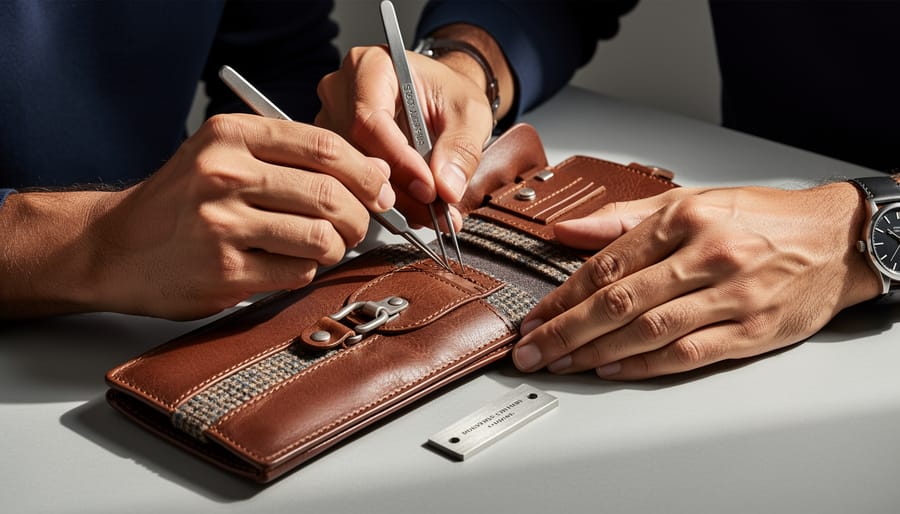
Acquiring a piece from a luxury brand partnership requires a discerning eye that looks beyond the prestige of two names appearing together. The most meaningful collaborative works reveal their value through careful examination, starting with the design narrative itself. Does this piece tell a coherent story that honors both brands’ identities while creating something genuinely new? Authentic luxury partnerships demonstrate clear creative rationale rather than simply co-branding an existing design. Look for distinctive elements that wouldn’t exist without the collaboration: perhaps the integration of a fashion house’s signature textile technique into furniture construction, or an unexpected material pairing that merges each brand’s expertise.
Craftsmanship remains the ultimate authenticator. Examine joinery, finish quality, and material selection with the same scrutiny you’d apply to either brand’s solo work. Superior partnerships elevate standards rather than compromise them, you should observe techniques and tolerances that meet or exceed what each collaborator produces independently. The best pieces often introduce innovative construction methods born from combining different manufacturing traditions, much like how hospitality design sometimes adapts residential techniques to commercial demands (similar considerations apply when evaluating a stateroom layout for functionality and aesthetic coherence).
Timeless collaborations share common characteristics that distinguish them from trend-driven releases. They demonstrate restraint rather than excess, the partnership enhances rather than overwhelms the fundamental design. Materials should be exceptional and durably beautiful, not selected merely for novelty. Consider whether the piece works independently of its branded context: would you still find it compelling without knowing the collaborators’ names? The answer reveals whether you’re investing in genuine design innovation or simply purchasing a logo combination.
Edition size and production approach offer crucial insights. Limited editions with numbered certificates suggest careful curation and potential value retention. Ongoing collaborative collections signal strong partnership commitment but may lack the exclusivity some collectors seek. Understanding whether a piece represents a one-time creative exploration or the beginning of an evolving relationship helps you assess its place within both brands’ broader narratives and your own collection strategy.
The Business of Beautiful: How Partnerships Reshape the Luxury Interior Market
Behind every successful luxury brand partnership lies a sophisticated business strategy that reshapes market dynamics and creates new value propositions. These collaborations aren’t merely about producing beautiful objects, they’re calculated moves that redefine competitive positioning, unlock new customer segments, and accelerate innovation cycles in ways that would be impossible for brands operating independently.
The market positioning benefits prove particularly compelling. When an established luxury furniture brand partners with a prestigious fashion house or celebrated designer, both entities elevate their cachet through association. The furniture brand gains access to the partner’s style authority and devoted following, while the partner extends their lifestyle vision into a new category with manufacturing expertise and distribution channels already in place. This symbiotic relationship creates what industry analysts call “borrowed equity,” where each brand lends credibility to the other, resulting in a combined market presence that exceeds the sum of its parts.
Global reach expands exponentially through strategic partnerships. A European heritage brand collaborating with an Asian design studio immediately gains authentic entry into markets where it might otherwise struggle with cultural relevance. The partnership provides not just products but also localized interior experience design narratives that resonate with regional sensibilities while maintaining universal luxury standards. Distribution networks interweave, showroom portfolios diversify, and suddenly a brand that was strong in Milan has genuine traction in Singapore or São Paulo.
Innovation acceleration represents perhaps the most transformative commercial impact. Luxury brand partnerships create protected spaces for experimentation where risk is shared and creative resources are pooled. A brand can explore radical new materials, unconventional forms, or cutting-edge production techniques within the safety net of a collaboration, testing market response before committing to full collection development. The partnership structure also facilitates knowledge transfer, centuries-old upholstery techniques meet space-age textiles, traditional joinery intersects with digital fabrication.
These collaborations fundamentally expand the boundaries of what luxury interior design can offer, creating categories that didn’t previously exist and setting new benchmarks for exclusivity, craftsmanship, and design vision that competitors must then strive to match.
Iconic Partnerships That Redefined Luxury Interiors
The landscape of luxury interior design has been forever altered by certain partnerships that transcended mere commercial arrangements to become cultural milestones. When Hermès collaborated with Dedon to create outdoor furniture collections, they didn’t simply apply a fashion brand’s aesthetic to garden pieces, they reimagined what luxury could mean in al fresco living. The partnership married Hermès’s legendary leather craftsmanship with Dedon’s innovative fiber weaving techniques, creating pieces that brought couture sensibility to previously utilitarian spaces. Understanding how it works requires looking at the careful balance these brands struck between maintaining distinct identities while creating something entirely new.
The Fendi Casa collaboration with Thierry Lemaire stands as another watershed moment, demonstrating how luxury fashion houses could extend their design DNA into residential interiors without diluting brand equity. Lemaire’s sculptural approach to furniture design, combined with Fendi’s mastery of materials and finishes, produced collections that felt simultaneously contemporary and timeless. These weren’t fashion accessories masquerading as furniture; they were legitimate design statements that happened to carry fashion house provenance.
Perhaps no partnership better exemplifies cross-industry collaboration than the union between Bentley Home and Luxury Living Group. This alliance brought automotive design principles, precision engineering, tactile luxury, performance-oriented thinking, into the living room. The resulting collections showcased how expertise from one luxury sector could inform and elevate another, creating furniture with the same attention to ergonomics and material innovation that defines high-performance vehicles.
What distinguished these collaborations from fleeting marketing exercises was their commitment to craft and longevity. Each partnership invested years in development, respected traditional making processes while embracing innovation, and created pieces meant to become heirlooms rather than trend statements. They proved that when luxury brands approach collaboration with genuine creative ambition rather than opportunistic cross-promotion, the results reshape what consumers expect from high-end interiors and establish new benchmarks for the industry.
The landscape of luxury interiors has entered a new chapter where collaboration fuels innovation, and partnerships between visionary brands create spaces that couldn’t exist through any single creative voice. These alliances do more than produce beautiful objects, they generate entirely new design languages, blending heritage with forward-thinking vision to craft environments that feel both timeless and thrillingly contemporary.
For discerning homeowners and design professionals, luxury brand partnerships offer something increasingly rare: genuine originality paired with impeccable pedigree. Each collaborative piece carries within it multiple narratives, the founding brand’s legacy, the partner’s creative philosophy, and the skilled artisans who bring these visions to life. This convergence of expertise and imagination transforms ordinary rooms into spaces that tell compelling stories and reflect sophisticated personal taste.
The future of personalized luxury interiors belongs to those who recognize that the most extraordinary spaces emerge from unexpected creative conversations. As established houses continue partnering with boundary-pushing designers, traditional craftspeople, and cross-industry innovators, the possibilities for creating truly distinctive environments expand exponentially.
Your space deserves this level of thoughtful curation. Explore partnership collections that resonate with your aesthetic sensibility, pieces that speak to your individual vision while connecting you to broader design narratives. The collaboration that transforms your interior awaits, one where artistry, craftsmanship, and vision converge to create something unmistakably yours.