
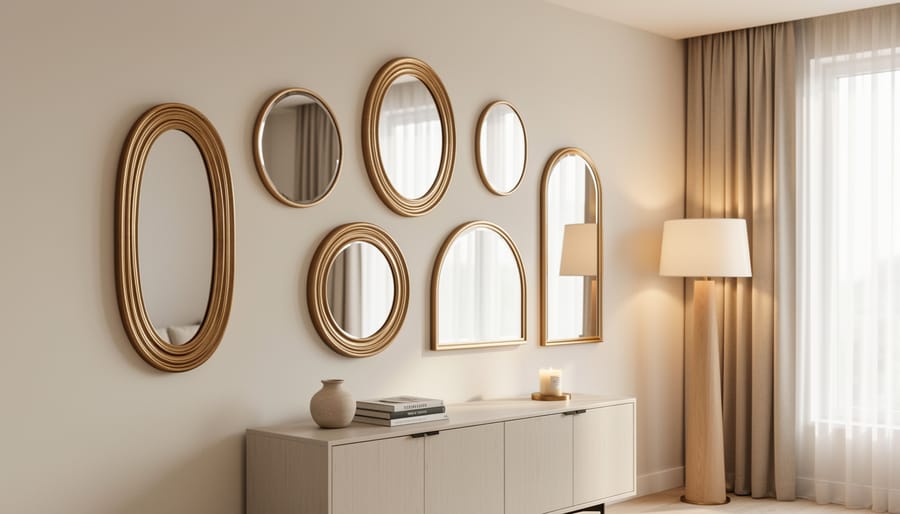
A wall mirror collection comes together in about an afternoon, and the method is simple: choose mirrors that share one unifying thread (a finish, a shape family, or a color of frame), map the arrangement on the floor or with paper templates, then hang each piece at the right height with hardware rated well beyond its weight. Moderate difficulty, a helper for the heavier pieces, and a little patience with a level.
Why does it work so well? Mirrors do something no painting can. They catch the window light at noon, hold the glow of a lamp at dusk, and quietly double the sense of space around them. Grouped with intention, they stop being accessories and become the focal point of the room, the wall guests drift toward and remember.
The most striking collections feel collected rather than purchased, which is where personalization matters. A sweep of sculpted gold ovals above a console, a cluster of mixed round and arched forms in a stairwell, or a single oversized statement piece flanked by smaller companions. Designers we work with often begin with the wall itself: its proportions, its light, the furniture beneath it. Then they build outward.
What follows covers the tools, the safety essentials, and the step-by-step process, so your collection hangs beautifully and stays securely in place for years.
Why a Collection of Statement Mirrors Transforms a Wall
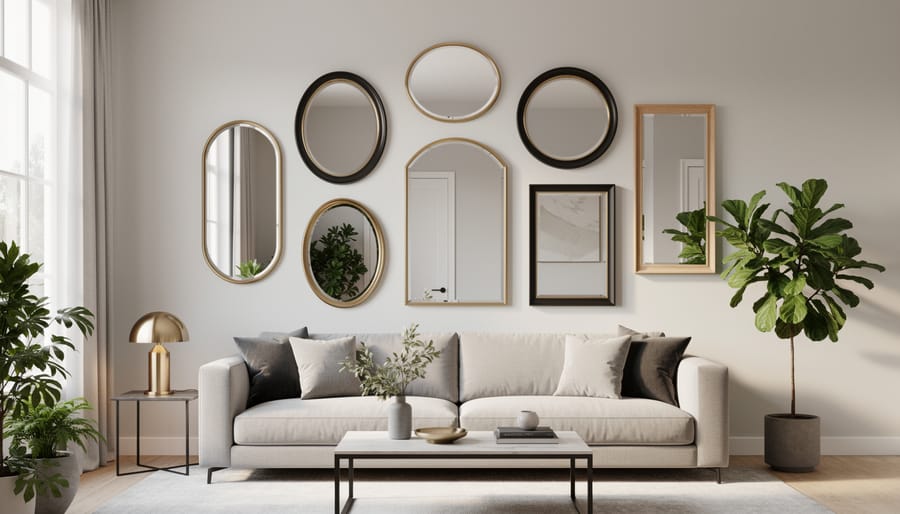
Walk into a room where a handful of mirrors share a single wall, and something shifts. Daylight from the window doesn’t simply stop at the glass; it travels, softened and multiplied, across the ceiling and into the darker corners. A collection does this far more generously than one mirror can, scattering light in several directions at once and giving the whole room a gentle, luminous depth.
The effect on space is just as striking. A well-placed grouping pushes the eye past the physical boundary of the wall, so a narrow hallway feels longer and a compact sitting room feels open. Because each mirror catches a slightly different view, the room seems to hold more than it does.
This is where the pieces stop being practical objects and become sculpture. A sunburst in aged brass, an arched frame in carved timber, a slim oval with a hand-finished edge: together they read as a composition rather than a grid of looking glasses. It is the clearest way to see how statement mirrors transform a space, whether they greet guests in a grand entryway or soften a quiet dressing corner.
Designer-crafted pieces deepen the story. A mirror shaped by a renowned designer or a skilled independent maker carries provenance, a point of view and a touch of craft that mass-produced glass simply cannot offer, and that character is what guests remember.
Tools and Materials to Gather Before You Begin
Choosing the Mirrors That Belong Together
A collection feels intentional when one thread runs through it. Choose that thread before you choose a single mirror. It might be a repeated finish, such as aged brass or sculpted timber, that quietly ties very different pieces together. It might be a shared palette, where round, arched and rectangular frames all stay within the same warm tones. Or it might be scale: one dominant hero mirror, with smaller companions placed around it like supporting players.
Look at your room before you fall for a frame. Your wall color, the height of your ceiling and the direction of your light will all shape how a grouping reads. A tall hallway can carry a vertical cascade of narrow mirrors, while a lower ceiling often calls for wider, more horizontal shapes. North-facing rooms tend to reward warmer metallics, and sun-drenched spaces can handle deeper, richer wood. Because every home is different, this is where personalization turns a nice arrangement into one that feels made for you.
Provenance adds depth, too. A mirror from a renowned designer brings a confident, sculptural silhouette. A piece from an independent maker brings the quiet evidence of the hand: a slightly irregular edge, a unique patina, a story you can tell at dinner. When you choose to support independent designers, you also end up with a collection that no one else on your street will have.
Not sure where to begin? InWood’s customer service team can help you curate a grouping, suggest pieces that complement what you already own, and narrow the field to a few mirrors that truly belong together. A short conversation can save you from the common mistake of buying beautiful pieces that never quite speak to each other.
Safety Warnings for Hanging Heavy Glass
Before a single hole is drilled, a little caution protects your walls, your mirrors and, most of all, you. Glass is beautiful, but it is heavy and unforgiving, so treat this stage as part of the craft rather than an obstacle to it.
Start with the wall itself. Confirm what it can truly carry, because drywall alone will not hold a substantial framed mirror. Locate studs with a stud finder, or plan to use anchors rated well above the weight of each piece. Check the manufacturer’s stated weight, then add a generous margin for safety.
Next, look behind the surface. Hidden wiring and pipes often run vertically from outlets and switches, so scan the area with a detector and avoid drilling directly above or below them. If your home is older, or you are unsure what lies inside the wall, pause and investigate before going further.
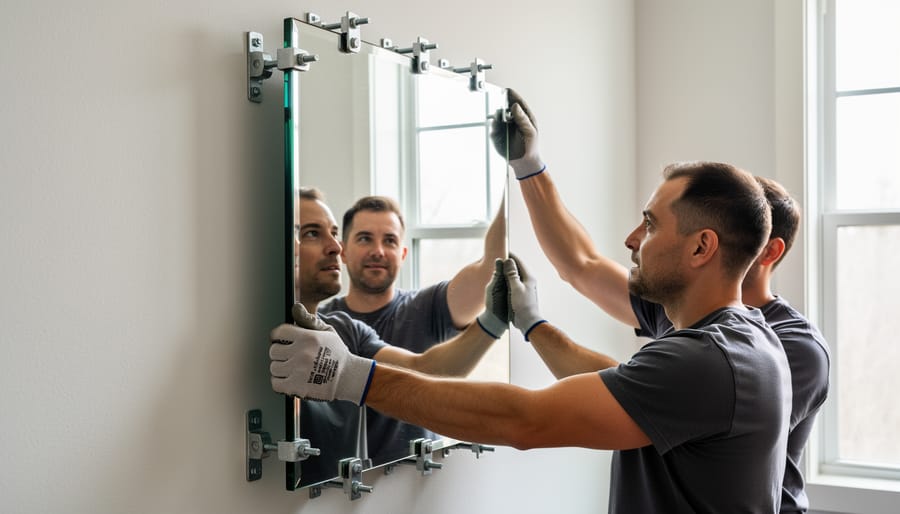
Handle the glass with care. Edges can be sharp, so wear gloves, lift with a partner for larger mirrors, and keep pieces upright rather than flat. Rest them on a soft blanket, never on a hard floor, while you work.
Resist the temptation to rely on adhesive hooks or sticky strips. They suit lightweight frames, not large glass, and a slow slip can end in a sudden fall. Choose proper hanging hardware matched to the weight.
There is no shame in calling in an expert. For oversized mirrors, plaster or masonry walls, or anything above a sofa or bed, a skilled installer offers peace of mind that lasts as long as the piece itself.
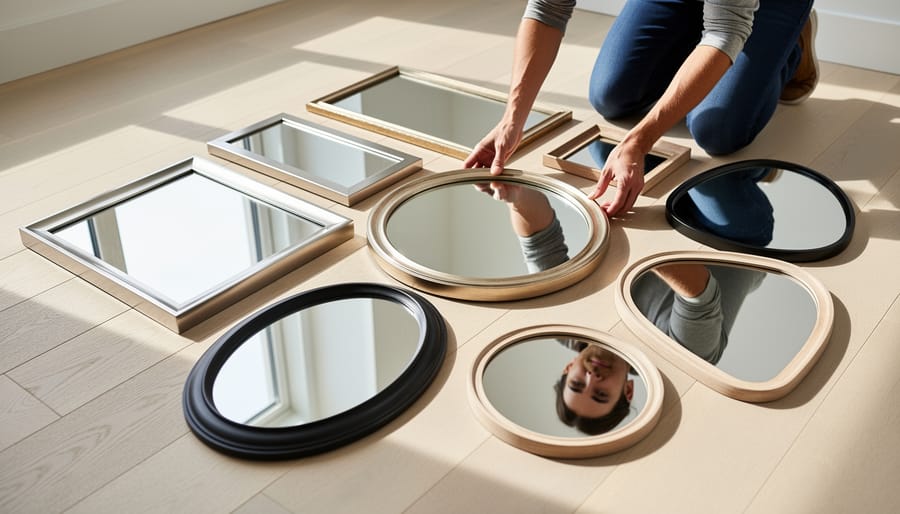
How to Plan, Arrange and Hang Your Mirror Collection, Step by Step
Arrangement Styles That Suit Different Spaces
A symmetrical grid suits the formal dining room, where order is the whole point. Matching rectangles or rounds, spaced with precision, echo the rhythm of a laid table and bring a calm, ceremonial elegance to the evening. Keep the gaps between frames identical and the effect feels almost architectural.
Living spaces ask for something looser. An organic, salon-style cluster, with mixed shapes and heights gathered around a shared finish, feels collected over time rather than bought in a single afternoon. Let the edges stay a little irregular. That is where the warmth lives, and where a sunlit window can scatter light across the whole room.
For narrow spaces, think vertically. A cascade of graduated mirrors drawing the eye upward makes a hallway feel taller and a stairwell feel like a gallery. This is the thinking behind the best statement mirror entryways where a guest’s first glance should land on something memorable and generous with light.
When you want drama without fuss, choose one oversized anchor and flank it with two or three smaller pieces. The large mirror carries the room, and its companions add rhythm and a quiet sense of scale. It is a confident, gallery-minded look that suits a fireplace, a console or a generous stretch of plain wall.
Whichever layout you favor, let it express the mood you want the room to hold: formal, relaxed, soaring or serene.
Verifying the Result and Refining Your Mirror Wall
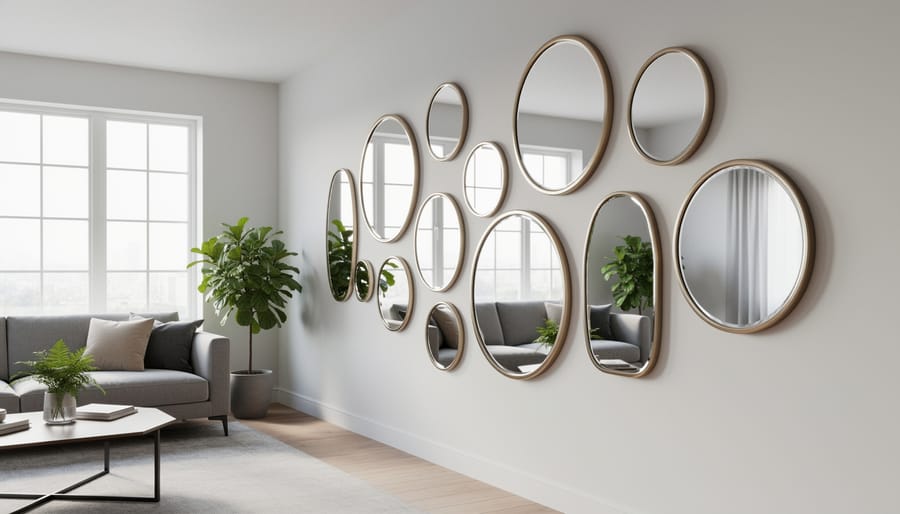
Once the last mirror is up, step back and let the wall settle. A secure, beautiful grouping is judged slowly, so give it a few minutes before you call it finished.
Start with a gentle weight test. Press lightly on each frame’s corners and nudge it sideways. Nothing should shift, creak or rattle. Then lay a level across the tops of the frames, and measure the gaps between neighbours so the breathing room feels deliberate rather than accidental.
Here is a quick checklist to run through:
- Each mirror sits firmly against the wall with no wobble.
- Spacing between frames is consistent from edge to edge.
- Reflections capture light or a pleasing view, never clutter.
- Hardware is concealed behind the frames.
- The glass is streak-free, wiped with a soft microfibre cloth.
Now watch how the wall behaves through the day. Morning light may sparkle across the glass, while evening lamplight turns the same grouping warm and amber. If a mirror catches a harsh glare or an unflattering corner, shift a nearby lamp or swap the object it faces. Sometimes a single frame needs a tiny adjustment to angle its reflection toward a window, and that one change can lift the whole composition.
Then comes the fun part. Anchor the display with a slender console, and think about how to style the area below with a sculptural lamp, fresh greenery or a handsome tray. Sconces on either side add a soft glow that makes the glass shimmer after dark. Finally, treat the wall as a living collection. Add one piece at a time, perhaps a designer-crafted find in a complementary finish, and let it evolve with you.
Common Questions About Statement Mirror Collections
Planning a mirror grouping naturally raises a handful of practical questions. Here are the ones we hear most often, answered with a designer’s eye.
How many mirrors make a collection?
Three is a comfortable starting point, and odd numbers tend to feel more organic on the wall. A single oversized hero piece flanked by two or four smaller companions can be just as compelling.
Can I mix frame finishes?
Absolutely, so long as something ties them together, whether that’s a shared shape, a related tone or a consistent scale. Aged brass beside sculpted timber, for instance, can feel intentional rather than accidental.
How high should a mirror grouping hang?
Aim for the center of the arrangement to sit around eye level, roughly 57 to 60 inches from the floor. Over a console or sofa, leave about 6 to 10 inches of breathing room between furniture and the lowest mirror.
Can InWood help me personalize a selection?
Yes. Our customer service team is happy to guide you toward pieces that suit your palette, ceiling height and light, including work from renowned designers and independent makers.
Beyond those essentials, a few other worries tend to surface. Mirrors do make a small room feel larger, but placement matters more than quantity. Position the grouping where it can capture a window’s glow or a lovely view, rather than reflecting clutter or a blank corner.
If you’re renting, check your lease before drilling. Many renters opt for a leaning arrangement on a sturdy console or floor-standing pieces, which delivers the same sense of layered light without touching the wall. For heavier mirrors, though, secure anchoring remains the safest path.
Bathrooms and hallways welcome mirror collections beautifully. In a bathroom, choose frames with finishes that tolerate humidity, and in a narrow hallway, a vertical cascade draws the eye upward and brightens the passage. In both, the goal is the same: let light travel and let the wall feel considered.
A wall of mirrors does more than decorate. It catches the morning, holds the evening glow, and turns a quiet stretch of plaster into a living composition of light and character. That is the quiet power of statement mirrors in interior design, and it is why the right grouping can change how an entire room feels.
You don’t need to commit to the whole wall at once. Begin with a single hero piece, one mirror whose finish, shape or scale speaks to you, and let it set the tone. Hang it securely, live with it through a few changes of light, then add companions that echo its character. A collection grows best when it grows slowly, with intention.
When you’re ready to choose, take a look at some luxury furniture shopping tips to sharpen your eye for craftsmanship and proportion before you buy.
Then explore InWood Furniture’s curated mirrors, created by renowned designers and independent makers whose work brings provenance and personality to a room. If you’d like a hand matching a piece to your palette, ceiling height or light, our customer service team is glad to help shape a personalized selection. And with international shipping, a mirror that was made to be admired can find its way to your wall, wherever home may be.